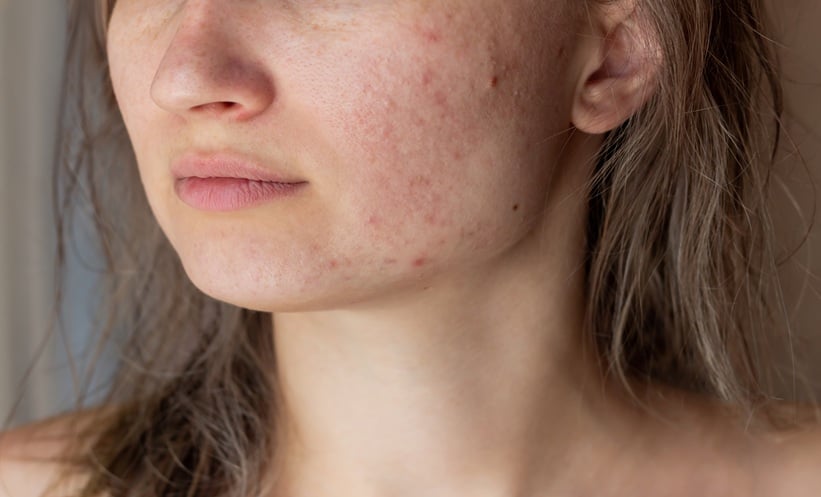
A NEW population-based study provides the strongest evidence to date that adolescents with acne vulgaris exhibit distinct facial cutaneous bacterial compositions, and highlights previously under-recognised microbial players that may contribute to acne pathogenesis or protection.
Acne vulgaris remains one of the most common dermatological conditions in adolescence, yet many microbiome-focused studies to date have been limited by small samples, methodological constraints, or homogenous study populations. To address these gaps, researchers analysed facial microbiota profiles from 926 adolescents (median age 13 years) representing a large, multiethnic cohort, comparing 399 physician-confirmed acne cases with 527 controls.
Using 16S rRNA sequencing and a comprehensive suite of analytical methods, including alpha and beta diversity assessments, permutational multivariate analysis, univariate coordinate analysis (ANCOM-BC2), and phylogenetic evaluation, the authors assessed both overall microbial diversity and species-level differences.
Key Bacterial Species Identified in Adolescents with Acne
The findings were striking. Adolescents with acne demonstrated significantly reduced microbial richness and diversity compared with acne-free peers. Acne status emerged as a major driver of variation in overall facial microbiota composition, accounting for over 4% of observed differences, a substantial effect in microbiome research. Importantly, several demographic and physiological factors, including skin colour, biological sex, puberty stage, and weight status, also independently influenced facial microbial patterns, emphasising the need for inclusive and representative study samples.
At the taxonomic level, acne cases showed higher relative abundances of Cutibacterium and Staphylococcus, and lower levels of Streptococcus. After adjusting for confounders and applying bias-corrected and phylogenetic analyses, three species emerged as key microbial signatures associated with acne: Cutibacterium granulosum, Cutibacterium acnes and Staphylococcus epidermidis.
Among these, C. granulosum showed particularly strong associations with acne, suggesting it may play a more prominent pathogenic role than previously appreciated. Conversely, the reduced presence of Streptococcus species in acne cases hints at a potential protective role that warrants further mechanistic investigation.
Clinical Implications
Overall, this study provides robust evidence that acne in adolescence is linked to distinct and measurable shifts in the facial microbiota. By leveraging a large, diverse cohort and advanced analytical techniques, the authors deliver important insights for future microbiome research and underscore the clinical significance of species-level microbial profiling in acne pathophysiology.
Reference
Witkam W CAM et al. Distinct bacterial facial cutaneous microbiota compositions in adolescents with acne vulgaris: a population-based cross-sectional observational study. Br J Dermatol. 2025; doi: 10.1093/bjd/ljaf508