SUMMARY OF KEY RESEARCH FINDINGS
The POET randomised clinical trial challenged the long-standing principle of the treatment of infective endocarditis by demonstrating that, in clinically stable patients with left-sided endocarditis, oral step-down treatment was non-inferior to conventional intravenous treatment.1,2 After a median follow-up of 5.4 years, the authors found that the composite outcome of all-cause mortality, unplanned cardiac surgery, embolic events, and relapse of bacteraemia remained lower in patients assigned to oral step-down treatment.3 This difference was mainly driven by a lower all-cause mortality.3 In a nationwide Phase IV study, the authors evaluated the effectiveness and safety of oral step-downtreatment in routine clinical practice,demonstrating an association with fewer in-hospital bed-days, no increase in recurrent bacteraemia, and lower 6-month all-cause mortality.4 Beyond the clinical benefits, the authors found that oral step-down treatment reduced healthcare resource use, mainly through fewer hospital bed-days and lower antibiotic costs.5
WHAT CHALLENGE DOES THIS ADDRESS?
Streptococcus spp., Enterococcus faecalis, and Staphylococcus aureus cause more than 70% of all endocarditis cases, butrequire different antibiotic treatmentregimens.2,6 These differences affect treatment duration, antibiotic costs, and length of hospitalisation, which may influence the cost savings achieved with oral step-down treatment. The authors performed a microorganism-specific cost analysis to determine whether the economic benefit of oral step-down treatment is consistent across the bacterial subgroups in the original POET cohort.1
In this partial within-trial analysis of the POET trial, the authors assessed cost estimates in 380 clinically stable adultswith left-sided endocarditis caused by Streptococcus spp., E. faecalis, andS. aureus treated with conventionalintravenous treatment (190 patients) ororal step-down treatment (190 patients).The analysis was conducted from a Danish hospital-provider perspective and included costs from randomisation until completion of antibiotic treatment for in-hospital bed-days, outpatient visits, and antibiotic costs. Patients assigned to oral step-downtreatment were discharged when clinicallyappropriate and followed twice weeklyin the outpatient clinic.1 Cost estimateswere based on official Danish prices, anddifferences between treatment groups with 95% CIs were estimated using non-parametric bootstrapping (Table 1).
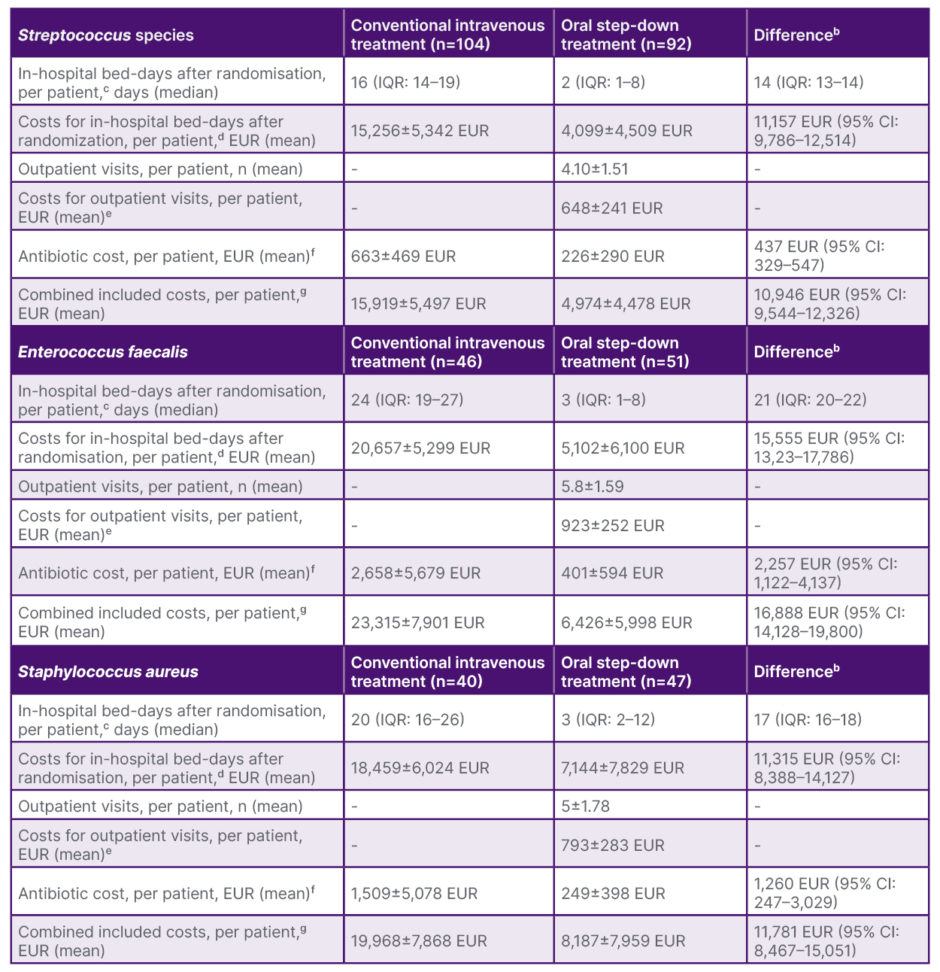
Table 1: A partial cost analysis from a Danish hospital-provider perspective of the POET trial.ᵃ
ªMedian with IQR values and means with SD (±) are given; 95% CIs were estimated by non-parametric bootstrapping with 10,000 resamples.
ᵇThis partial cost-analysis was conducted from a Danish hospital-provider perspective and included only in-hospital bed-days, outpatient follow-up visits, and medication costs from randomisation until completion of antibiotic
treatment. Costs of home care, diagnostic evaluation including procedures and surgeries, and broader societal costs were not included. Cost estimates were not adjusted for inflation, because of the short time horizon.
ᶜRandomisation took place after the individual patient had reached the stabilisation criteria as defined in the POET trial.
After randomisation, oral step-down treatment resulted in a mean combined saving per patient of 10,946 EUR (95% CI: 9,544–12,326) for endocarditis caused by Streptococcus spp., 16,888 EUR(95% CI: 14,128–19,800) for endocarditiscaused by E. faecalis, and 11,781 EUR(95% CI: 8,467–15,051) for endocarditis caused by S. aureus (Table 1). All bacterialsubgroups showed cost savings, adding an economic perspective to the establishedclinical benefits of oral stepdown treatmentacross causative microorganisms.1 Cost savings were primarily driven by shorterin-hospital stay (Table 1). After randomisation, the median difference inhospital bed-days was 14 days (interquartile range [IQR]: 13–14) per patient for streptococcal endocarditis, 21 days (IQR: 20–22) for E. faecalis endocarditis, and 17 days (IQR: 16–18) for S. aureusendocarditis (Table 1). Additional outpatient visits and antibiotic costs accounted only for a small proportion of total included costs per patient (Table 1).
RELEVANCE TO EUROPEAN PRACTICE
The largest per patient savings wereobserved in E. faecalis endocarditis. This is particularly relevant because these patientsare often older, more comorbid, and morelikely to have prosthetic heart valveinfection, with prolonged hospitalisationcontributing substantially to resource use.7,8Oral step-down treatment can therefore reduce hospital stays and release hospital capacity in E. faecalis endocarditis. In S.aureus endocarditis, savings remainedsubstantial despite the typically acute disease course and frequent need for cardiac surgery.2,9 Switching to oral step-downtreatment can therefore still provide cost savings in complex and critically ill patients once patients are clinically stable.
This partial within-trial cost analysis did not includepost-discharge costs such as home care, rehabilitation, and productivity loss. It captured the hospital resources most directly affected by oral step-down treatment and provides microorganism-specific estimates of its economic impact from a healthcare provider perspective.
WHAT ARE THE NEXT STEPS FOR THE RESEARCH?
In conclusion, oral step-down treatment reducedin-hospital bed-days and provided both favourableclinical outcomes and health-economic benefits across streptococcal, E. faecalis, and S. aureusendocarditis. These findings provided a strong rationale for systematically identifying eligible patients and treating them with oral step-down therapy in accordance with current standard practice.