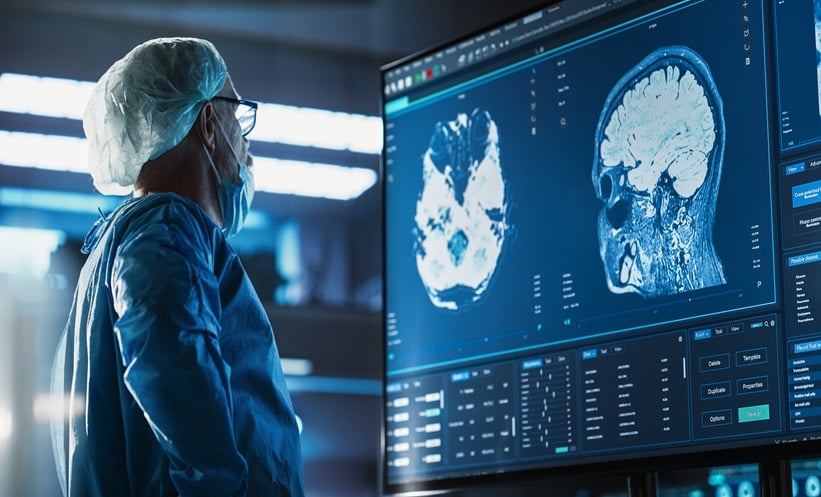
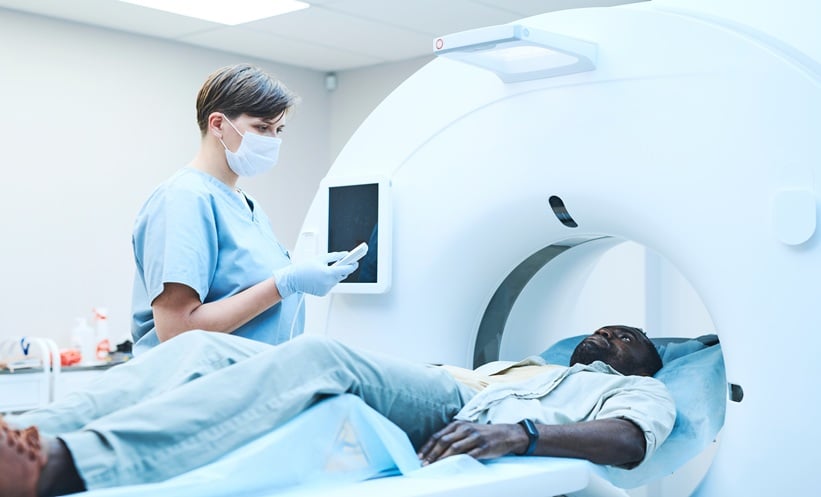
ARTIFICIAL INTELLIGENCE successfully assisted a neurosurgeon during an operation to save the sight of a man with a brain tumour, in a world-first.
The surgery, carried out at the National Hospital for Neurology and Neurosurgery (NHNN),University College London Hospital (UCLH), was part of a clinical trial and carried out using real-time AI analysis of live surgical feed to aid the surgical team with precision.
AI Assisted Risky Surgery
Rhys Hibbert, 48, a customer service manager from Bedfordshire, became the first ever patient to receive this kind of surgery to treat a brain tumour that could have threatened his vision and rendered him blind if not removed.
Mr Hibbert was diagnosed with an 11cm pituitary gland tumour after experiencing a seizure in 2024. He went on to lose his peripheral vision and experience severe hormone imbalances. He volunteered to receive the surgery as part of research being carried out at UCLH.
During the cutting-edge surgery, which successfully restored Mr Hibbert’s sight, AI replaced the use of pre-surgical scans by providing a real-time analysis of the critical structures within his brain directly to the surgeons.
By doing so, it helped identify risky areas to avoid while removing as much tumour as safely as possible from the pituitary gland, an area of the brain packed with blood vessels and the nerves controlling vision.
This specific form of AI assistance made a critical difference by reducing the risk of serious adverse events that could have led to blindness or stroke for Mr Hibbert.
Doctors and scientists at UCHL say that the AI also has the potential for other surgical applications, such as tracking instruments or instrument-tissue interactions, all with the aim of aiding surgeons to carry out complex and high-risk surgeries.
The ‘Best’ of AI
The AI system was developed at the UCL Hawked Institute and runs on an NVIDIA Clara IGX platform, specifically designed to support real-time AI in medical device settings as part of research dedicated to advancing healthcare technology.
Using a large collection of annotated endoscopic pituitary surgery videos from previous operations, researchers were able to train the AI model to prepare for the surgery. This technology had previously been evaluated and used as a training tool for surgeons carrying out this procedure.
Professor Hani Marcus, UCL Queen Square Institute of Neurology and consultant neurosurgeon at the NHNN, performed the world-first surgery alongside Mr Danyal Khan, a UCL PhD candidate and UCL/UCLH neurosurgical resident leading the work.
Prof Marcus said: “Huge thanks to the trial participants and to the team committed to improving patient outcomes by taking this important first step globally and using UK homegrown AI to help reduce risk during these delicate surgeries.”
James Frith, the UK’s Health Innovation Minister, commented: “This is an example of AI at its best: patients getting care previously deemed unimaginable thanks to the latest groundbreaking technology.”
He added: “I am so pleased for Rhys that he had this life-changing surgery as part of government-funded research that will pave the way for the treatments of tomorrow.”