THE MEDICINES AND HEALTHCARE PRODUCTS REGULATORY AGENCY (MHRA) has approved the use of UK-donor plasma for five high-priority medicines.
The decision, announced on 9th July 2026, follows an assessment of the potential risk of variant Creutzfeldt‑Jakob disease (vCJD).
Independent experts concluded that the risk of transmission through these products is negligible.
Plasma-Derived Medicinal Products
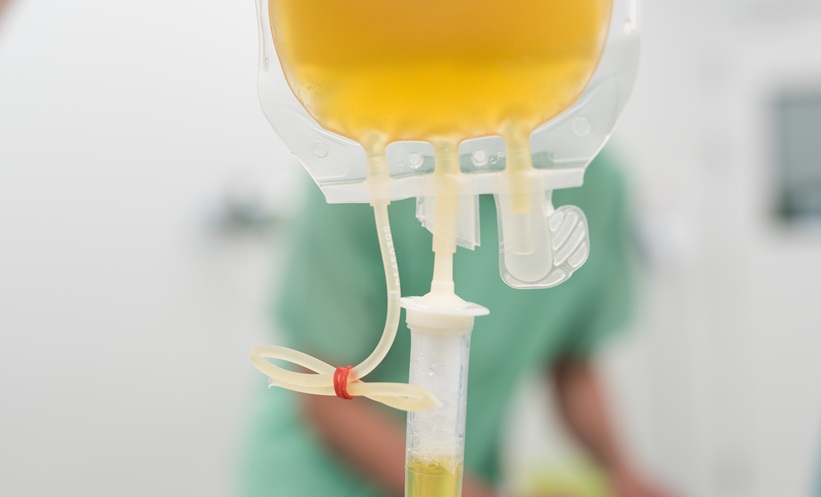
Plasma proteins from donated human blood can be used to make medicines known as plasma-derived medicinal products (PDMPs).
They are typically given to critically ill patients to replace or restore vital plasma proteins and help treat or prevent serious diseases, bleeding, infections, and other conditions where the body’s natural plasma components are missing, deficient, or functioning improperly.
This includes patients with conditions such as bleeding disorders, neurological and autoimmune diseases, liver disease, or sepsis.
A precautionary ban on the use of UK-sourced plasma for manufacturing PDMPs has been in place since 1999, due to concerns around vCJD transmission, requiring reliance on imported plasma at a time of growing global demand.
Restrictions were lifted for immunoglobulin and human albumin products in 2021 and 2023, respectively.
Review of the Risk of vCJD Infection
The review drew on advanced modelling to assess the risk of patients receiving the five proposed PDMPs being infected with vCJD.
Allowing the use of plasma from UK blood donors for the manufacture of Fibrinogen, Prothrombin Complex Concentrates, C1 Esterase Inhibitor, Factor X, and Protein C, will aid supply and reduce reliance on imports from other countries, the MHRA has reported.
Alison Cave, Chief Safety Officer, MHRA, London, UK, said: “Patient safety is our top priority and we will always take precautionary measures where there is any possibility of risk to public health.
“Having thoroughly reviewed the evidence, we are now confident that the risk of using plasma from UK donors is negligible, ensuring these potentially life-saving products will become available to those who need them.”
The MHRA encouraged the public to donate blood and plasma regularly, given the growing demand for PDMPs and potential supply constraints.
Plasma can currently be donated at three specialist centres in Twickenham, Reading, and Birmingham.
However, it is also taken from every whole blood donation collected across England.
Gerry Gogarty, Director of Blood and Plasma supply, NHS Blood and Transplant, Bristol, UK, said: “This announcement is another significant step which highlights the trust and confidence in UK plasma and our ability to create a more resilient UK supply of plasma medicines.
“These life-changing treatments are only possible thanks to our incredible blood and plasma donors.
“As the UK’s ambition to increase plasma medicines production grows, we need more regular donors to ensure these vital treatments are available to every patient who depends on them.
“We urge people to come forward and help us continue to grow and boost our supplies.”
Featured image: chanawit on Adobe Stock
- Author: