Key Summary:
- Recipients had twice the adjusted odds of airflow limitation versus controls.
- PRISm affected 23.8% of recipients, compared with 11.8% of controls.
- Prior pulmonary infection was associated with airflow limitation after transplantation.
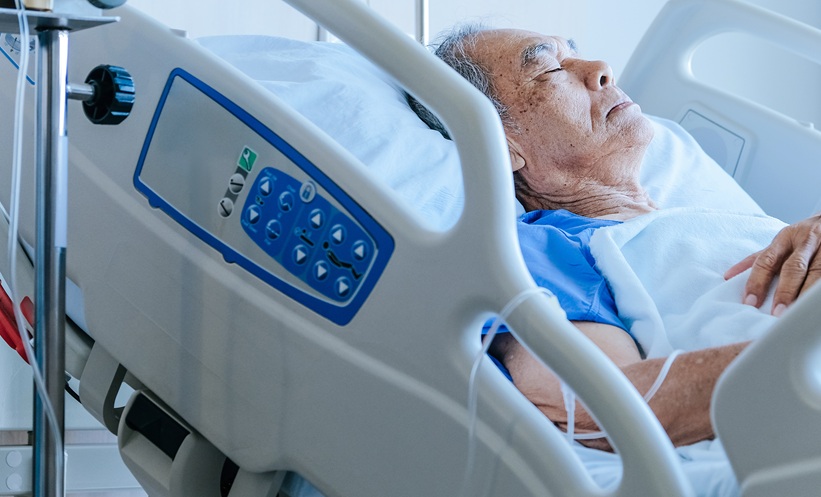
LIVER transplant recipients had poorer lung function and more dyspnea than matched adults in a nationwide study.
The findings indicate that chronic pulmonary abnormalities may represent an underrecognized comorbidity following liver transplantation, extending concerns beyond the established burden of acute pulmonary infections.
Investigators compared 512 adult liver transplant recipients from a Danish nationwide comorbidity study with 2,010 age and sex matched participants from a general population cohort. Participants underwent spirometry to assess forced expiratory volume in 1 second (FEV1), forced vital capacity (FVC), airflow limitation, and preserved ratio impaired spirometry (PRISm).
The researchers also assessed patient reported breathlessness using the modified Medical Research Council dyspnea scale.
Airflow limitation was identified in 10.7% of liver transplant recipients and 7.1% of controls. The difference was statistically significant. PRISm was approximately twice as common among recipients, affecting 23.8%, compared with 11.8% of the control group.
After adjustment for age, sex, ethnicity, cumulative smoking exposure, and educational status, living with a transplanted liver was associated with more than twice the odds of airflow limitation. The adjusted odds ratio was 2.06.
The association was stronger for PRISm, with liver transplant recipients having nearly three times the adjusted odds of this spirometric pattern compared with controls.
Adjusted analyses also found that recipients had an FEV1 that was 363 mL lower and an FVC that was 549 mL lower. Both findings indicate clinically relevant differences in measured lung function that were not explained by the demographic and smoking related factors included in the models.
Liver transplant recipients reported more frequent and more severe dyspnea than matched controls. Among recipients, a previous pulmonary infection was associated with increased odds of airflow limitation, with an adjusted odds ratio of 2.23.
The observational findings do not establish why lung function differed between the groups. However, the consistency across spirometry measurements, airflow patterns, and patient reported symptoms supports greater clinical awareness of pulmonary comorbidities in liver transplant recipients.
Recognition of dyspnea and impaired lung function may help clinicians identify recipients who warrant further pulmonary evaluation.
Reference
Arentoft N et al. Impaired lung function in liver transplant recipients compared with the general population: A nationwide matched cohort study. Transplantation. 2026. doi:10.1097/TP.0000000000005916.
Featured Image: ponsulak on Adobe Stock.
Each article is made available under the terms of the Creative Commons Attribution-Non Commercial 4.0 License.