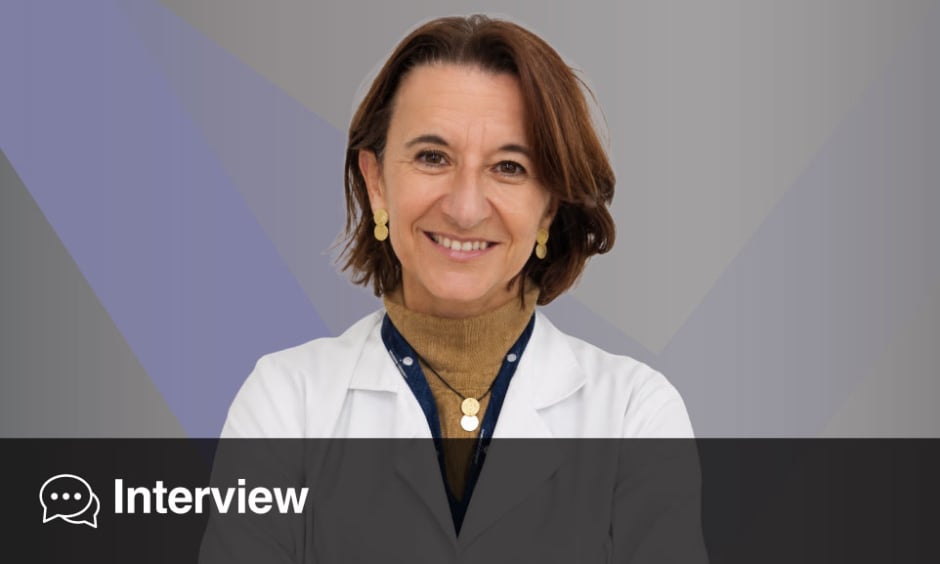
Roser Torra | President of the European Renal Association (ERA); Nephrology Department, Fundació Puigvert, Barcelona; University Autònoma Barcelona, Spain
Citation: EMJ Nephrol. 2026;14[1]:50-53. https://doi.org/10.33590/emjnephrol/0EER452I

Could you share how you became interested in nephrology and how your focus on genetic kidney diseases developed?
I became interested in nephrology quite early during medical school. I knew that I preferred medical specialties over surgical ones, but at that time, I felt that internal medicine was perhaps too broad for me. I wanted a specialty with depth, complexity, and a strong scientific basis.
Nephrology seemed to me to be the perfect medical specialty. It brings together many different areas: immunology, genetics, chronic disease, acute care, and also technology, particularly dialysis and transplantation. It is also a specialty in which patients are often very complex, so they come to us not only for kidney-related problems, but for many other medical issues.
My interest in genetic kidney diseases developed naturally from this. These diseases are often rare, complex, and underdiagnosed, and they affect not only the patient but also the whole family. Very early in my career, I realised that improving diagnosis and care for these patients could have a major impact. That has been one of the main driving forces of my professional life.
What have been the most significant milestones in your research career so far?
I have devoted most of my career to inherited kidney diseases, and I feel proud of having contributed both clinically and scientifically to this field.
One important milestone was my early work in autosomal dominant polycystic kidney disease, helping to better define the clinical differences between PKD1 and PKD2. Later, I became very involved in improving the diagnosis of genetic kidney diseases, including the use of next-generation sequencing. We published one of the first papers on the use of next-generation sequencing for PKD1, which was technically very challenging at that time.
More recently, I have been involved in developing new tools, including AI-based approaches, to support the diagnosis of inherited kidney diseases. I am also very proud of my work in Alport syndrome, particularly in autosomal dominant Alport syndrome, which has historically been less recognised.
In addition, I have worked on other rare diseases such as Fabry disease, tuberous sclerosis complex, cystinosis, and many others. Overall, I think my main contribution has been to help bring rare genetic kidney diseases into routine nephrology practice, making them more visible and better understood.
How has the field of genetic nephrology evolved since you first began working in it?
The field has evolved enormously. When I started, genetic diagnosis was very limited. In many cases, we could only perform linkage analysis, which was time-consuming, required several affected family members, and was not useful for many patients.
The arrival of next-generation sequencing completely changed the field. Suddenly, we were able to study many genes at the same time, diagnose patients much more accurately, and identify conditions that had previously been missed or misclassified.
This has changed not only diagnosis, but also clinical care. Today, a genetic diagnosis can guide prognosis, treatment decisions, family counselling, reproductive counselling, and living donor assessment. It also helps us avoid unnecessary tests, including kidney biopsies in selected cases.
Another major change is that genetic nephrology is no longer a niche area. It is becoming part of everyday nephrology. Many patients with chronic kidney disease (CKD), glomerular disease, cystic disease, or kidney failure of unknown cause may have an underlying genetic disorder. The challenge now is to make genetic testing accessible, to interpret results correctly, and to ensure that nephrologists are trained to use this information in clinical practice.
What are the main barriers to the implementation of precision medicine worldwide?
I think the biggest barrier to the implementation of precision medicine worldwide is the lack of resources in many countries.
We often say that next-generation sequencing has made genetic testing more accessible and more democratic. This is true to some extent because the technology has become faster and cheaper than it was in the past. However, it is still not a reality for many patients around the world. Even within Europe, access to genetic testing is not equal across countries or healthcare systems.
The same is true for access to new treatments. Most of the drugs developed for rare diseases are orphan drugs and are extremely expensive. Even when they are approved by regulatory agencies, reimbursement is not always available, or it may take a long time. This means that patients with the same disease may have very different opportunities depending on where they live.
So, for me, the challenge is not only scientific. We have made enormous progress in understanding diseases and developing targeted therapies, but we also need to ensure equitable access to diagnosis, expertise, and treatment. Otherwise, precision medicine will only benefit a small proportion of patients, and this would be a major failure.
What are the biggest unmet needs in rare kidney disease research and care?
One of the biggest unmet needs in rare kidney disease research and care is the difficulty of conducting clinical trials. Because these diseases have a low prevalence, it is often very challenging to recruit enough patients, design adequately powered studies, and generate robust evidence.
Even when a clinical trial is successful, another major challenge appears, like access to treatment. New drugs for rare diseases are often highly expensive. This makes their prescription difficult in many low- and middle-income settings, but it can also be a challenge in high-income countries. Sometimes the treatment is not available to all patients who might benefit, but only to a very specific subgroup, depending on regulatory approval, reimbursement policies, or local criteria.
Diagnosis is another important unmet need. Although genetic testing and specialist expertise have improved enormously, they are still not available everywhere. Many patients remain undiagnosed or are diagnosed very late, which delays appropriate care, family counselling, and access to potential therapies.
So, for me, the main unmet needs are better access to diagnosis, more feasible clinical trial models for rare diseases, and more equitable access to effective treatments once they become available.
Are there specific areas, such as CKD progression, transplantation innovation, oracute kidney injurycare, where you think Europe could lead globally?
Yes, I think Europe has a very strong opportunity to lead globally in several areas of nephrology.
One of them is CKD progression. Europe has excellent clinical research groups, strong registries, and very good collaborative networks. This gives us the possibility to generate high-quality real-world evidence, to better understand disease progression, and to improve early detection and prevention strategies.
Another important area is rare and genetic kidney diseases. Europe has a long tradition of collaboration in rare diseases, with reference networks, expert centres, patient organisations, and international registries. This is a field where Europe can clearly lead, not only in research, but also in improving diagnosis and access to specialised care.
Transplantation is also a key area. Europe has outstanding transplant programmes, strong expertise in immunology, organ allocation, living donation, and long-term follow-up. I think Europe can lead in making transplantation more accessible, safer, and more personalised, including better donor and recipient matching, improved management of immunosuppression, and innovation in organ preservation and allocation.
Finally, I think Europe can also contribute significantly to the integration of AI and digital tools in kidney care. But this has to be done carefully, with strong ethical standards, good data governance, and a clear focus on improving outcomes for patients.
So yes, I believe Europe can lead globally, especially if we continue to work collaboratively across countries, disciplines, and institutions.
How hasthe European Renal Association (ERA)evolved during your time in leadership roles, particularly in terms of scientific strategy, research coordination, education, and collaboration across Europe?
I think ERA has evolved enormously in recent years. One of the most important changes is that ERA has become a much stronger, more inclusive, and more connected community.
We now have around 30,000 members, which is a very important achievement. But beyond the number itself, what I find most valuable is the feeling of community among our members. ERA is not only a scientific association: it is a place where nephrologists, researchers, nurses, allied health professionals, young professionals, working groups, committees, and national societies can work together with a shared purpose.
In terms of scientific strategy, I think we have made a strong effort to give more visibility and responsibility to the Working Groups and Committees. They represent the real scientific expertise of ERA, and they are now more active, more connected with each other, and more involved in shaping ERA’s scientific priorities.
Education has also evolved very significantly. Of course, the Congress remains our flagship educational and scientific event, and this year in Glasgow, UK, we had more than 10,600 registrations, which is extraordinary. But education is now much broader than the Congress. We have expanded educational activities throughout the year, with courses, webinars, science meetings, and initiatives that reach many different groups within the kidney community.
Research coordination has also become more important. ERA is increasingly acting as a platform that connects people, ideas, registries, working groups, and national societies. This is essential if we want to address the big challenges in nephrology, from CKD prevention to kidney replacement therapies, rare diseases, AI, and sustainability.
Overall, I think ERA has become more open, collaborative, inclusive, prestigious, and ambitious. And perhaps most importantly, it has become a real community. A strong community, built by its members, who are working together to improve renal care across Europe and beyond.
Looking ahead, how do you see ERA changing over the next 5–10 years in response to developments such as precision medicine and digital health?
I think ERA will have to evolve together with the profound changes that are already transforming medicine. Precision medicine, digital health, and AI will become increasingly embedded in our daily clinical practice. This is not something for the distant future; it is already happening.
At ERA, we are setting up an AI Committee because we believe that AI and digital tools will have a major impact on nephrology. They may help us with diagnosis, risk prediction, treatment decisions, patient monitoring, and the use of large datasets. But this also means that we have a responsibility to guide our community on how to use these tools properly.
For me, one of the most important roles of ERA will be education. Not only education on new technologies, but also education in critical thinking. This was, in a way, the spirit of our last Congress in Glasgow: challenge your thinking. Do not believe everything that is said. Do not trust incomplete data. Do not confuse correlation with causation. And do not apply information blindly without understanding the patient in front of you.
Precision medicine should not mean simply using more data or more technology. It should mean using all the available information to make better decisions for a particular patient. This includes clinical data, genetics, biomarkers, imaging, patient preferences, and context.
So, over the next 5–10 years, I see ERA becoming even more important as a platform for education, collaboration, and responsible innovation. We need to help nephrologists embrace new tools, but also remain critical, thoughtful, and patient-centred.