Meeting Summary
Darolutamide in combination with androgen deprivation therapy (ADT) is approved by the FDA for the treatment of metastatic hormone-sensitive prostate cancer (mHSPC) based on the global Phase III ARANOTE study. This article summarizes data from the Phase II ARASEC trial of darolutamide plus ADT, presented at the 2026 American Urological Association (AUA) Annual Meeting. ARASEC used an innovative study design that compared prospectively enrolled patients with matched historical controls from a previous Phase III trial. Reflecting evolving treatment guidelines for mHSPC in the USA, this novel study design enabled darolutamide to be compared to an ADT monotherapy arm in a treatment landscape where an ADT-alone arm was not feasible.
In the ARASEC study, darolutamide in combination with ADT significantly improved progression-free survival (PFS) and overall survival (OS) versus the ADT control arm in patients in the USA with mHSPC. These new data add to the existing evidence base for darolutamide plus ADT in mHSPC, reinforcing findings from the pivotal ARANOTE trial and supporting a consistent safety profile.
Background: ARASEC Innovative Study Design
Darolutamide has received approval from the FDA and the EMA for the treatment of mHSPC based on the global Phase III ARANOTE study, in which darolutamide plus ADT demonstrated a significant improvement in radiological PFS (rPFS) versus placebo plus ADT (hazard ratio [HR]: 0.54; 95% CI: 0.41–0.71; p<0.0001).1,2 However, as the treatment landscape in mHSPC continues to evolve towards doublet and triplet combination strategies, ADT monotherapy has now become less appropriate as a clinical comparator.3
The objective of the ARASEC study was to generate USA-relevant data for darolutamide in combination with ADT to complement existing evidence from the ARANOTE trial.4-6 Additional data on darolutamide plus ADT were also requested by clinicians.4 However, by the time of ARASEC study conception in 2020, combination therapy had replaced ADT as the recommended standard of care for mHSPC in the USA.7 To ensure all patients participating in ARASEC received optimal treatment, it was therefore not feasible to use an ADT-only control arm in the trial (Figure 1).4-12
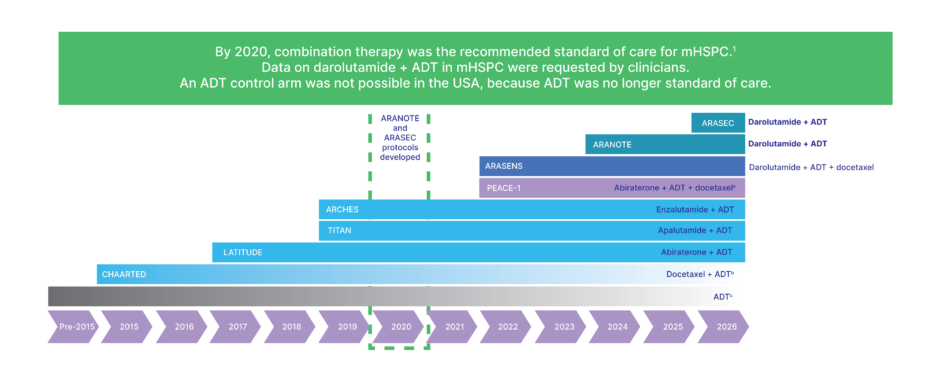
Figure 1: Why was ARASEC needed?7-13
aNot licensed indication.
bNo longer recommended as doublet regimen.
cNot recommended as monotherapy in most patients.
ADT: androgen deprivation therapy; mHSPC: metastatic hormone-sensitive prostate cancer.
To overcome this challenge, an innovative study design was employed for the ARASEC study. Researchers used a novel and pragmatic methodology that compared a prospective darolutamide plus ADT treatment arm against a historical ADT control arm from the CHAARTED study.4-6 Data from CHAARTED were readily available for use as a historical control as this study was sponsored by the National Cancer Institute (NCI).8 The similarity in design of ARASEC and CHAARTED also rendered the inter-trial
comparison of the differential treatment effect achievable.6
Patient Population and Endpoints
ARASEC and CHAARTED patients were matched 1:1 using propensity scores based on age, Eastern Cooperative Oncology Group (ECOG) performance status (PS), extent of disease, prior local therapy, Gleason score, and prostate-specific antigen (PSA) level (Figure 2).4-6
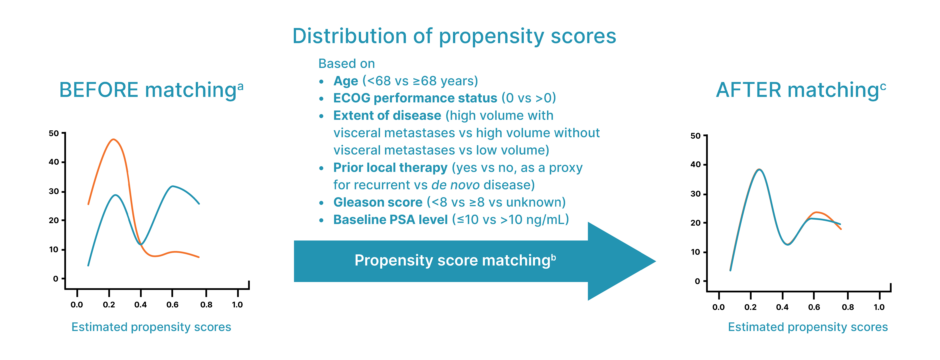
Figure 2: Propensity score matching in ARASEC.4
aIn ARASEC, two patients were excluded from matching for missing extent of disease and one patient for missing extent of disease and PSA; in CHAARTED, one patient was excluded for missing prior local therapy and PSA.
bUsing the greedy nearest-neighbor method without replacement and a caliper of 0.1.
cAssuming a one-sided alpha of 0.025, power of 90%, and hypothetical enrollment ratio of 1:1 between the
investigational and external control arms, approximately 160 patients/arm and 161 PFS events across the two arms were required to detect a HR of 0.60 in median PFS.
ECOG: Eastern Cooperative Oncology Group Performance Status; HR: hazard ratio; PFS: progression-free survival; PSA: prostate-specific antigen; vs: versus.
Overall, 223 patients were included in the open-label darolutamide (600 mg twice daily) plus ADT arm, while 393 patients comprised the ADT control arm from CHAARTED. Inclusion and exclusion criteria, as well as schedule of assessments, aligned with the CHAARTED enrollment criteria.4-6 The primary study endpoint was PFS. Secondary endpoints were OS, time to metastatic castration-resistant prostate cancer (mCRPC), rPFS, PSA <0.2 ng/mL, response rate, and safety.4-6
A potential limitation of the historical control arm used in ARASEC is that it may affect interpretation of study findings, particularly OS data. To mitigate this, additional sensitivity analyses were performed to address potential selection bias, by assessing the impact of including unmatched patients, and time bias, by comparing the ARASEC darolutamide arm to the contemporary ADT arm from ARANOTE using the same propensity score matching.4-6
Overall, 220 patients in the ARASEC arm and 392 from the historical CHAARTED arm were propensity score matched to give 160 patients in each arm. Matching resulted in well-balanced treatment arms in the ARASEC study in terms of median age (~70 years), ECOG status (~80% PS 0), Gleason score (two-thirds ≥8 at diagnosis), prior local therapy (~70% de novo mHSPC), and extent of disease. Median PSA was 6.0 ng/mL in the darolutamide plus ADT arm compared to 9.8 ng/mL in the ADT arm, and 62.5% and 50% of patients, respectively, had PSA levels ≤10 ng/mL.4-6
Key Results
Darolutamide plus ADT significantly improved the primary endpoint of PFS compared to ADT. Median PFS was not estimable for darolutamide plus ADT versus 14.3 months for ADT (HR: 0.29; 95% CI: 0.20–0.40; p<0.001; Figure 3A).14 OS was also significantly improved with darolutamide plus ADT versus ADT alone (HR: 0.50; 95% CI: 0.30–0.82; p=0.003; Figure 3B).4,5,14
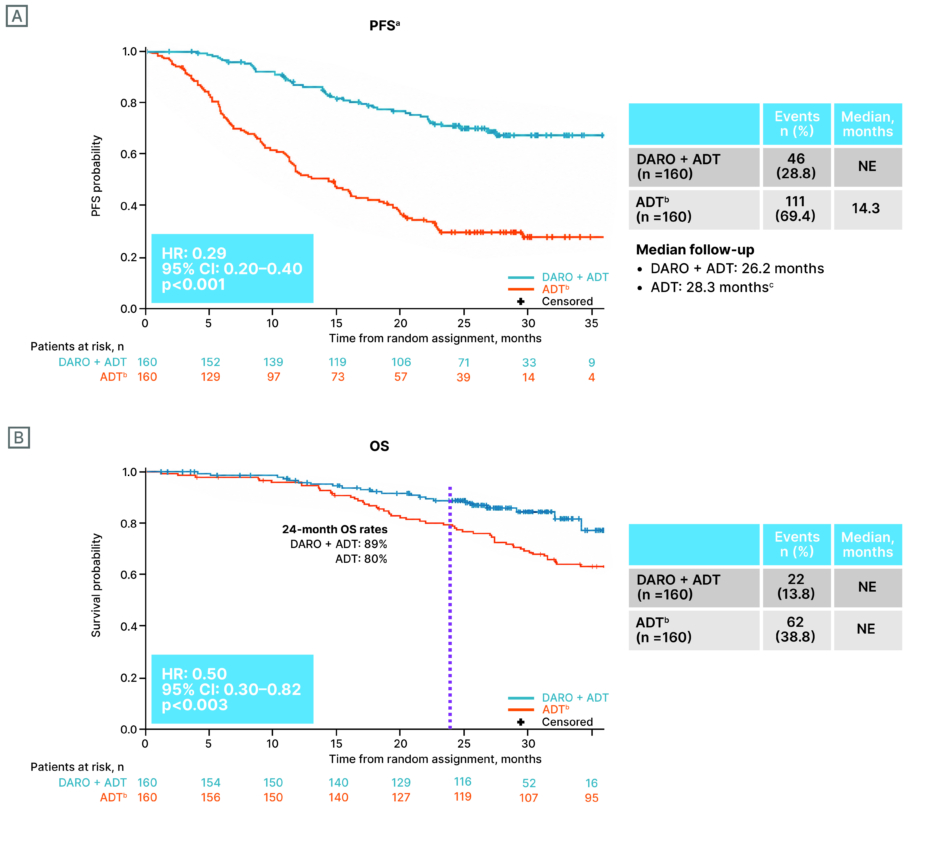
Figure 3: A) PFS and B) OS results from the ARASEC study of darolutamide plus ADT.14
aPFS is defined as PSA progression or clinical progression (increasing symptomatic bone metastases or radiological progression [RECIST v1.1 for soft tissue metastases and PCWG3 criteria for bone metastases] or clinical deterioration due to cancer per investigator’s opinion) or death.
bCHAARTED.
cThe CHAARTED ADT arm had a longer observation time than the ARASEC darolutamide arm. Hence, an algorithm was used to provide data from CHAARTED with similar maturity to those in the darolutamide arm at data cut-off. The median follow-up was then computed as the median time to censoring using a published method.14
ADT: androgen deprivation therapy; DARO: darolutamide; HR: hazard ratio; NE: not estimable; OS: overall survival; PFS: progression-free survival; PSA: prostate-specific antigen.
Darolutamide plus ADT also significantly delayed the time to mCRPC (HR: 0.26; 95% CI: 0.18–0.38; p<0.001) and rPFS versus ADT (HR: 0.30; 95% CI: 0.19–0.48; p<0.001). Among the 152 patients with progression to mCRPC, proportionally more patients in the ADT arm (64.5%) versus the darolutamide arm (26.2%) received subsequent life-prolonging therapy.4,5
PSA <0.2 ng/mL response rates were more than doubled in the darolutamide arm versus the ADT arm at all time points assessed. Overall, 68% of patients treated with darolutamide plus ADT had a PSA response at any time, compared to 33% on ADT (p<0.001).4,5
Results from all sensitivity analyses were aligned with the primary findings of ARASEC. The sensitivity analysis versus a contemporary Phase III cohort, addressing time bias, strongly supported the ARASEC primary findings, with all CIs, including for OS, below 1. In this sensitivity analysis versus ARANOTE, darolutamide plus ADT prolonged PFS (HR: 0.30; 95%: CI 0.21–0.44) and OS (HR: 0.55; 95% CI: 0.30–0.99) compared to ADT alone. Similarly, the sensitivity analysis in the broader match-eligible population, to address selection bias, strongly supported the ARASEC primary findings.4
The CHAARTED study did not evaluate safety outcomes in the ADT monotherapy arm, so direct comparisons with the darolutamide plus ADT arm in ARASEC were not possible.8 However, the observed safety and tolerability of darolutamide in ARASEC was in line with the established safety profile. Treatment-emergent adverse events in the darolutamide arm were mostly Grade 1/2 (57.9%) and led to discontinuation in 8.1% of patients.4,5
Overall, the ARASEC study provides further clinical evidence supporting the efficacy and favorable safety profile of doublet therapy with darolutamide plus ADT in patients with mHSPC, reinforcing findings from ARANOTE in a US population.
How Might the ARASEC Innovative Study Design Reshape Future Prostate Cancer Trials?
ARASEC marks the first prospective study in prostate cancer to use a protocol-specified external Phase III trial control arm.4-6 Guidance from the FDA supports this approach of using prior clinical trial data as an external control arm, assuming comparability exists between the two cohorts, and if a suitable analytic method is used to identify and manage differences and potential confounders.6,15
Importantly, this innovative study design provides a way of answering key clinical questions that cannot be easily addressed through a traditional trial design. In ARASEC, it enabled the efficacy of darolutamide plus ADT to be compared to ADT monotherapy against the backdrop of shifting standards of care where an ADT-alone arm was no longer considered appropriate.4-6
However, the unique and novel approach of using an external control arm for a prospective study also has potential broader implications for the design of future clinical trials in the prostate cancer arena. It avoids the need for a placebo arm, therefore alleviating patient concerns about suboptimal treatment. This can also help to speed up study enrollment because all patients will be sure of receiving effective treatment. Rapid study accrual in turn helps expedite endpoint analysis, with the overall benefit of reducing the costs of running a clinical trial.4-6
Ultimately, ARASEC exemplifies a new and potentially practice-changing way of conducting a clinical study in prostate cancer, which may pave the way for further well-run, single-arm clinical trials using existing data from matched historical controls.6