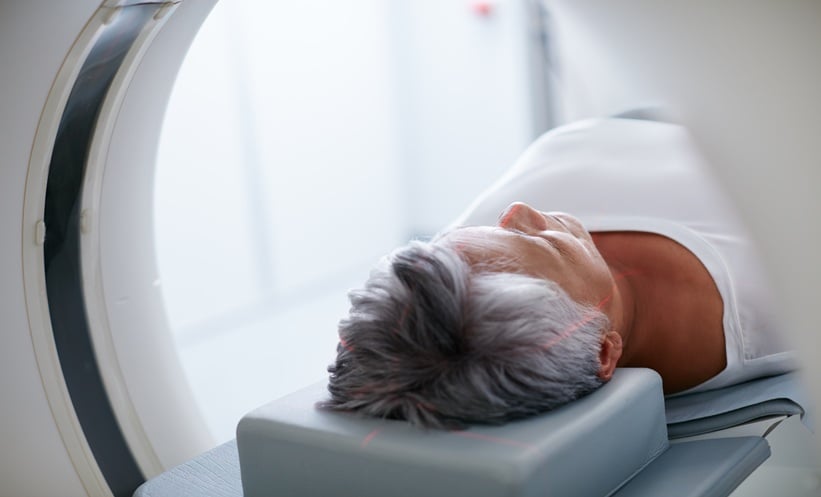
A NEW international clinical trial will evaluate whether artificial intelligence (AI) can match radiologists in detecting clinically significant prostate cancer on MRI, addressing growing global demand for imaging interpretation.
Rising Demand for Prostate MRI Drives AI Research
Researchers highlighted that the global incidence of prostate cancer is projected to double over the next two decades, while increasing adoption of MRI-based diagnostic pathways may further increase imaging demand. The potential introduction of biparametric MRI protocols and national MRI screening programmes could substantially expand the number of prostate scans requiring interpretation. However, accurate prostate MRI interpretation requires specialised expertise and is associated with a steep learning curve, with optimal diagnostic performance typically achieved by experienced genitourinary radiologists.
At the same time, workforce pressures are increasing. Investigators noted projections suggesting a global radiologist shortfall of approximately 40% by 2027, raising concerns about maintaining diagnostic capacity as imaging demand grows.
To address this challenge, researchers have launched the PARADIGM trial, an international, prospective, multicentre diagnostic study designed to determine whether AI can perform at a level comparable to radiologists when identifying clinically significant prostate cancer. The trial is designed as a within-patient non-inferiority study and aims to recruit 500 men over an 18-month period.
Participants will undergo standard-of-care prostate MRI using either 1.5T or 3.0T scanners with at least a pelvic phased-array coil. MRI examinations will be independently interpreted by both a radiologist and a primary AI algorithm, with each reader blinded to the other’s results. After this initial assessment, the radiologist will review the AI output and produce a merged report, retaining the ability to override AI findings if necessary to ensure patient safety.
Lesions identified as suspicious by either the radiologist or the AI system will undergo targeted biopsy, with optional perilesional and systematic sampling. The primary outcome of the trial will be the proportion of men diagnosed with clinically significant prostate cancer, defined as Gleason grade group ≥2. Secondary outcomes will include rates of clinically insignificant cancer detection and diagnostic performance characteristics of both AI and radiologists.
Commencement of the PARADIGM Trial
Currently, 45 centres across 14 countries have expressed interest in participating in the trial and are undergoing MRI quality control procedures. Recruitment for the study is expected to begin in the first quarter of 2026, with the trial aiming to generate the first prospective, level-1 evidence evaluating AI performance in prostate MRI diagnosis.
Reference
Ng A et al. Artificial intelligence or radiologist interpretation for prostate cancer diagnosis. ECR Congress. 4-8 March, 2026.
Featured image: peopleimages.com on Adobe Stock