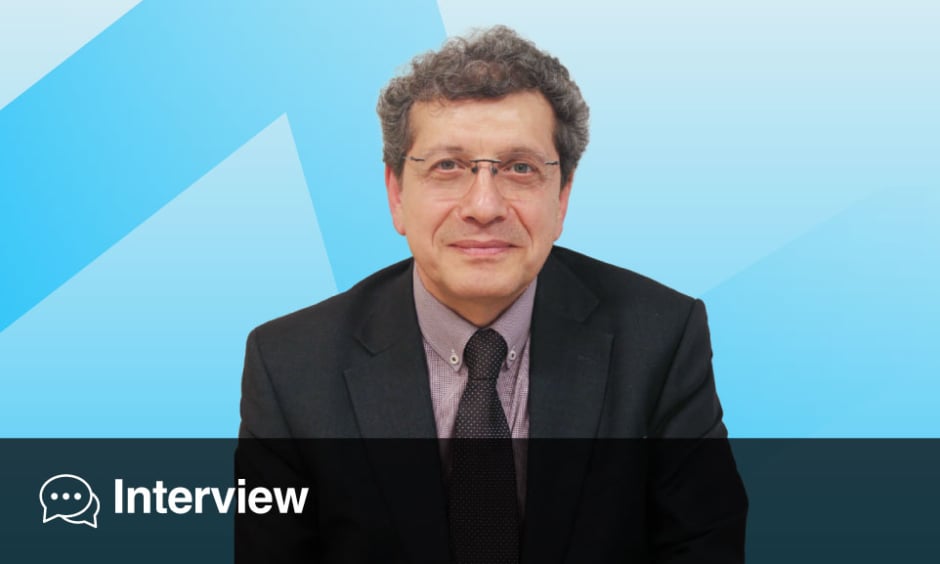
Ertan Saridogan | Professor of Gynaecological Surgery, University College London; Consultant in Reproductive Medicine and Minimal Access Surgery, University College London Hospitals, UK; President, European Society for Gynaecological Endoscopy (ESGE)
Author: Alena Sofieva, EMJ, London, UK
Citation: EMJ Repro Health. 2026;12[1]:95-97. https://doi.org/10.33590/emjreprohealth/550KET1C

The management of endometriosis has evolved considerably over recent decades. What have been the most important changes in clinical practice, and where do significant unmet needs remain?
The management of endometriosis has been evolving for much longer than the past decade. If we look back 40 or 50 years, treatment options were very limited. Medical therapy largely consisted of progestogens or danazol, which was effective for some women but associated with significant side effects. Surgery was usually reserved for women whose symptoms had become severe enough to require hysterectomy.
The first major shift came with the wider adoption of laparoscopic surgery during the 1990s and early 2000s. Initially, ablative techniques such as laser surgery became popular, particularly for superficial disease. However, we later recognised that many women have deep endometriosis, where excisional surgery offers much better outcomes.
As surgical techniques advanced, understanding of retroperitoneal pelvic anatomy became an essential part of endometriosis surgery. This has allowed surgeons to remove disease more completely while minimising complications.
Medical treatment has also progressed considerably. Newer progestogens and, more recently, gonadotropin-releasing hormone (GnRH) antagonists have expanded the therapeutic options available for women whose symptoms are not adequately controlled.
Perhaps the biggest change, however, has been recognising the limitations of both surgery and medical treatment. Endometriosis is a chronic condition. Even extensive surgery does not necessarily cure the disease, and recurrence remains common.
Today, the focus is increasingly on long-term management, recognising that endometriosis is a chronic condition requiring ongoing care rather than a single definitive solution or quick fix.
How do you decide whether surgery or medical treatment is the most appropriate option for an individual patient?
The decision should always be individualised and made jointly between the patient and her clinician. In many situations, medical therapy represents an appropriate first-line approach, particularly if symptoms are controlled and side effects remain acceptable.
However, there are circumstances where surgery becomes essential. These include bowel or ureteric obstruction caused by deep endometriosis, suspicion of malignancy within an ovarian endometrioma, or other situations where anatomical distortion threatens organ function.
Outside these indications, both medical and surgical management may be reasonable options. The patient’s symptoms, reproductive plans, previous treatments, and personal preferences all need to be considered when deciding on the most appropriate strategy.
Women with complex benign gynaecological conditions often require input from multiple specialists. How can multidisciplinary care improve outcomes?
Multidisciplinary care has become one of the defining developments in modern benign gynaecology.
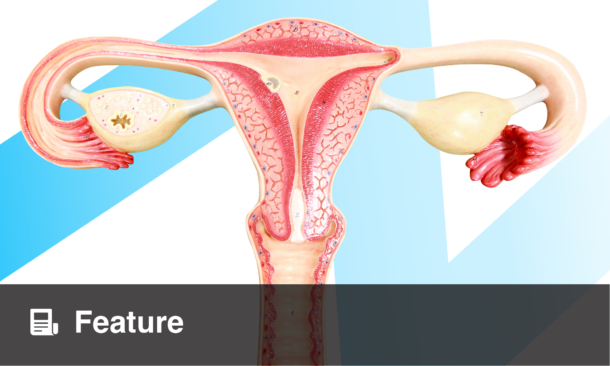
Endometriosis affects far more than the reproductive organs. Disease may involve the bowel, bladder, ureters, diaphragm, or thoracic cavity, meaning that optimal care frequently requires collaboration with colorectal surgeons, urologists, thoracic surgeons, radiologists, and pain specialists.
Equally important is recognising that many women experience chronic or centralised pain. These patients often benefit from physiotherapy, specialist pain management, psychological support, and specialist nursing alongside surgical and medical treatment.
This approach mirrors the multidisciplinary cancer model, which has clearly improved outcomes over many years. Increasingly, similar models are being adopted for other benign gynaecological conditions such as pelvic floor disorders and, in the future, may become routine for fibroid management as newer minimally invasive therapies continue to emerge.
Fertility preservation has become an increasingly important consideration in women with endometriosis. Which patients should clinicians be thinking about?
Not every woman with endometriosis will experience infertility. Although the risk is increased compared with the general population, many women conceive naturally.
The greatest concern arises when surgery involves ovarian endometriomas because excision inevitably removes some healthy ovarian tissue and reduces ovarian reserve.
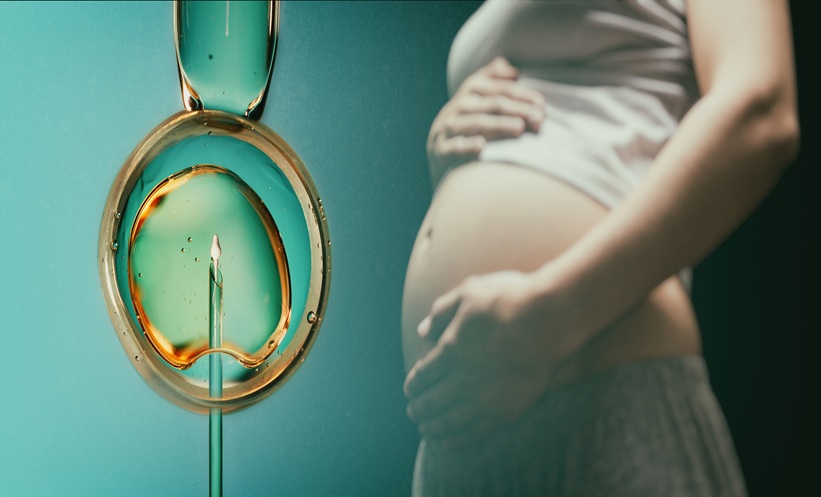
This has prompted increasing discussion around fertility preservation. At present, women with bilateral endometriomas or recurrent ovarian surgery appear to be those most likely to benefit from egg or embryo cryopreservation before surgery, as these groups face the greatest risk of diminished ovarian reserve.
However, many important questions remain unanswered. We still lack robust prospective data identifying exactly who benefits most from fertility preservation, when it should be offered, and whether current strategies are cost-effective. These are areas where further research is urgently needed.
Surgical innovation continues to advance rapidly, from robotics to AI and novel diagnostic technologies. Which developments have the greatest potential to improve patient care?
The most exciting developments may not actually be in surgery itself but in diagnosis.
Imaging has improved enormously. High-quality transvaginal ultrasound and MRI can now diagnose many cases of deep endometriosis without the need for diagnostic laparoscopy. The challenge is ensuring these techniques become more widely available and that clinicians receive sufficient training to perform and interpret them accurately.
Another particularly promising area is biomarker research. One of the biggest challenges in endometriosis remains delayed diagnosis. Reliable biomarkers, potentially combined with imaging findings, symptom profiles, and AI, could enable women to receive a diagnosis much earlier than is currently possible.
Recent work evaluating novel diagnostic tests is encouraging, although these approaches still require robust prospective evaluation before they become part of routine practice.
AI will almost certainly contribute to future diagnosis and clinical decision-making, although I believe its role in surgical planning remains some way off.
Robotic surgery, meanwhile, should be viewed primarily as another surgical platform. For experienced laparoscopic surgeons, it does not fundamentally change surgical principles. However, robotics may make advanced minimally invasive surgery easier for younger surgeons to learn, and that could have an important impact on future training.
Training the next generation of minimally invasive surgeons is becoming increasingly challenging. How should surgical education evolve?
Training is changing because healthcare itself is changing.
Previous generations of surgeons spent considerably longer hours in hospitals, allowing greater operative exposure during training. Today’s trainees have shorter working hours and fewer opportunities to develop technical skills through clinical experience alone.
As a result, simulation-based education has become increasingly important.
Simulation allows trainees to develop psychomotor skills before operating on patients, while hands-on cadaveric courses, structured educational programmes, webinars, and specialist workshops all help bridge the gap created by reduced clinical exposure.
At the European Society for Gynaecological Endoscopy (ESGE), we recognised this challenge many years ago through the development of the Gynaecological Endoscopic Surgical Education and Assessment (GESEA) programme. This provides structured training and certification before surgeons progress to increasingly complex procedures in the operating theatre.
Importantly, modern gynaecological surgery itself has evolved. Today’s surgeons require skills that were rarely taught during residency several decades ago, particularly advanced retroperitoneal dissection for deep endometriosis. Training programmes therefore need to evolve alongside surgical practice.
As the ESGE President, what are your priorities for the Society over the coming years?
Education remains one of our highest priorities.
The ESGE has invested heavily in structured training programmes, hands-on courses, scientific meetings, and educational resources designed to support surgeons throughout their careers. Our aim is not only to improve technical skills but also to create opportunities for clinicians to exchange knowledge and share best practice internationally.
We are also committed to supporting research and innovation through our congresses and our open-access journal, which provides an important platform for disseminating new evidence.
Although the ESGE began as a European society, it has become increasingly international. Our educational programmes are now expanding well beyond Europe, with growing participation across Asia, Africa, the Americas, and Oceania.
Ultimately, our goal is to ensure that high-quality minimally invasive gynaecological surgery becomes accessible to women worldwide through better education, collaboration, and continuous professional development.