Abstract
Objective: To assess maternal and fetal outcomes of antenatal women who were COVID-19-positive and treated with casirivimab and imdevimab (CAS+IMD) monoclonal antibodies.
Methods: This was a prospective observational cohort study at the Government Medical College in Thiruvananthapuram, India, from 1st July 2021–30th September 2021. The exposed group comprised 73 high-risk antenatal women with mild–moderate COVID-19 who received CAS+IMD per Kerala State COVID-19 treatment guidelines. Historical controls comprised 40 high-risk antenatal women with mild–moderate COVID-19 who did not receive CAS+IMD. Disease severity and progression were assessed clinically and biochemically. Adjusted logistic regression accounting for baseline imbalances (diabetes) was performed.
Results: Among controls, 17.50% had disease progression versus 5.48% in the exposed group (adjusted odds ratio: 0.24; 95% CI: 0.06–0.91; p=0.035). Oxygen requirement was 20.00% in controls versus 5.47% in the exposed group (adjusted odds ratio: 0.23; 95% CI: 0.06–0.88; p=0.031). Non-invasive ventilation was required for 12.50% of the controls versus 2.74% of the exposed group. Invasive ventilation was required for 5.0% of the controls, whereas it was not required for the exposed group. Newborn COVID-19 positivity occurred in 7.50% of controls versus 5.48% of the exposed group (p=0.670). No hypersensitivity reactions occurred in the exposed group.
Conclusion: This study demonstrates the effectiveness and safety of monoclonal antibodies in preventing COVID-19 progression in high-risk antenatal patients. In this observational cohort study, CAS+IMD administration was associated with lower rates of COVID-19 progression and oxygen requirement after adjusting for diabetes. However, residual confounding (including higher remdesivir use in the exposed group) and modest sample size preclude causal claims. Randomised or larger controlled studies are needed.
Key points
1. Pregnant women with COVID-19 face heightened risk of severe disease. Monoclonal antibodies can reduce this severity, but previous monoclonal antibody data in pregnancy is limited to small, uncontrolled case series lacking a comparison group.2. This prospective observational cohort study compared 73 high-risk antenatal women with mild–moderate COVID-19 treated with casirivimab and imdevimab against 40 historical controls who did not receive the drug.
3. Casirivimab and imdevimab administration in COVID-19 was associated with lower rates of disease progression and oxygen requirement, but residual confounding and modest sample size mean larger randomised studies are needed to confirm causality.
INTRODUCTION
COVID-19 is a multisystem infectious disease caused by SARS-CoV-2.1 Multiple studies have shown that pregnant women, due to physiological changes in immunity, are susceptible to acquiring COVID-19 infection, with potential grave consequences.2
Neutralising monoclonal antibodies (mAb) targeting specific epitopes in the SARS-CoV-2 spike protein have been shown to reduce hospitalisations in high-risk populations with the risk of progression to severe COVID-19.3 In November 2020, the FDA issued an Emergency Use Authorization (EUA) for the monoclonal antibody cocktail casirivimab and imdevimab (CAS+IMD) for the treatment of mild-to-moderate COVID-19 in patients at high risk of progression to severe disease.4 Due to acquired mutations in specific epitopes in the spike protein domain, Omicron-lineage variants are not neutralised by CAS+IMD.
The approved dosage in India by the Central Drugs Standard Control Organization (CDSCO) for adults is 600 mg of CAS and 600 mg of IMD administered together either subcutaneously or as a single intravenous infusion.5 Injection site reactions and infusion-related reactions were the most commonly reported adverse events.6 As human IgG1 antibodies are known to cross the placental barrier, CAS+IMD has the potential to be transferred from the mother to the developing fetus, but the benefits or risks to the developing fetus are not known.
Prior observational reports on the use of CAS and IMD in pregnancy have been limited to small retrospective case series and individual case reports without comparator groups. Thilagar et al.7 reported 51 pregnant women who received mAb therapy, describing no immediate adverse effects or disease progression, but lacked a control arm. Similarly, Hirshberg et al.8 and Mayer et al.9 provided preliminary safety data from small cohorts. The present study expands upon this prior experience by providing a prospective, comparative cohort analysis with a historical control group, thereby allowing preliminary assessment of effectiveness relative to standard care without mAb therapy. To the authors’ knowledge, this is the largest comparative cohort study of CAS and IMD in high-risk antenatal women with mild-to-moderate COVID-19.
The authors’ study aimed to assess maternal and fetal outcomes of antenatal women who are COVID-19-positive with risk factors who were treated with this mAb cocktail.
MATERIALS AND METHODOLOGY
The study was designed and conducted as a prospective observational cohort study with historical controls in the Department of Obstetrics and Gynaecology, SAT Hospital, Government Medical College Thiruvananthapuram (GMCT), India, from 1st July 2021–30th September 2021, after obtaining approval from the Institutional Research Committee and Human Ethics Committee (HEC NO:10/09/2021 MCT). The cohort comprised high-risk antenatal patients with COVID-19 confirmed either by molecular methods or rapid antigen tests. The exposed group comprised high-risk antenatal patients with mild-to-moderate COVID-19, who were administered CAS 600 mg and IMD 600 mg as a single-dose intravenous infusion per Kerala State guidelines. Historical controls (unexposed group) comprised high-risk antenatal patients with mild-to-moderate COVID-19 who had not been administered CAS+IMD.
Disease Severity Assessments
The clinical parameters for disease severity assessment were:
- Hypoxia (SpO2 ≤94% on room air)
- Tachycardia (pulse rate >110/min)
- Respiratory distress (respiratory rate >24/min)
- Hypotension (blood pressure <90/60 mmHg)
- Altered sensorium
- PaO2/FiO2 <300 mmHg
The laboratory parameters for disease severity assessment were:
- C-reactive protein (CRP) >5 mg/L
- Creatinine phosphokinase >twice the upper limit of normal
- Ferritin >300 mcg/mL
- Lactate dehydrogenase (LDH) >400 U/L
- Troponin T elevation
- Elevated D-dimer >2.5 mg/dL
- Multi-organ dysfunction
- COVID-19 disease severity categories:10
- Mild: Respiratory rate <24/min, SpO2 >94% on room air
- Moderate: Respiratory rate between 24–29 /min, SpO2 91–94% on room air
- Severe: Respiratory rate ≥30 /min, SpO2 <90% on room air
mAbs (CAS and IMD) were administered early in the disease course to prevent progression in the highest-risk groups. mAbs were not administered to: (1) those requiring oxygen therapy due to COVID-19; (2) those on chronic oxygen therapy or requiring increased oxygen from baseline; or (3) those with >10 days from symptom onset.
Inclusion and Exclusion Criteria
Inclusion criteria:
- Exposed group: high-risk antenatal women with mild–moderate COVID-19 who were administered CAS+IMD between 1st July 2021–30th September 2021.
- Unexposed group (historical controls): high-risk antenatal women with mild–moderate COVID-19 who had not been administered CAS+IMD.
Exclusion criteria: High-risk antenatal patients who did not give consent.
Risk factors considered: Diabetes, systemic arterial hypertension, cardiovascular disease, pulmonary disease, chronic kidney disease, chronic liver disease, cancer, HIV, BMI >25 kg/m², and immunosuppressants or biologics.
Historical Controls: Definition and Temporal Context
The historical control group comprised consecutive high-risk antenatal patients with mild-to-moderate COVID-19 who presented to the authors’ institution between 1st April 2021–30th June 2021, immediately preceding the availability of CAS+IMD at their centre. The exposed group (also referred to as cases) were enrolled between 1st July–30th September 2021, after CAS+IMD became available under Kerala State guidelines. Both periods fell within the same delta variant surge in India. Controls were consecutive patients meeting the same inclusion/exclusion criteria as cases, except for CAS+IMD administration. No other changes occurred in institutional management protocols between the two periods. COVID-19 vaccination was available to all adults ≥18 years in India from 1st May 2021. So, vaccination was available during both periods. Vaccination status was recorded for all participants.
After obtaining informed written consent, data for the exposed group were captured on a validated structured questionnaire. Control data were extracted from case records. Both groups were followed up to 6 weeks postpartum. Privacy and confidentiality were maintained.
Statistical Analysis
Data were coded and analysed using IBM SPSS Statistics for Windows version 25 (IBM, Armonk, New York, USA). Descriptive analysis was performed. Categorical variables were compared using chi-square or Fisher’s exact test, and continuous variables using the t-test or Mann–Whitney U test. To address baseline imbalances between groups, multivariable logistic regression was performed for two primary outcomes: (1) COVID-19 disease progression; and (2) oxygen requirement. Covariates were selected in advance based on clinical relevance and baseline differences (diabetes, symptomatic status, disease severity, and remdesivir use). Due to limited outcome events (11 for progression, 12 for oxygen requirement), final adjusted models included only the most imbalanced covariate (diabetes) to avoid overfitting. Adjusted odds ratios (aOR) with 95% CI are reported. A two-sided p value <0.05 was considered statistically significant. A total of 73 cases and 40 controls were studied.
RESULTS
During the study period, CAS+IMD was administered to 73 high-risk antenatal women with mild-to-moderate COVID-19. The historical control group comprised 40 such patients who did not receive mAb.
Most patients were symptomatic at diagnosis (84.93% of cases versus 47.5% of controls). Asymptomatic patients (15.07% of cases, 52.2% of controls) were diagnosed via screening before delivery or due to high-risk exposure.
Among cases, 82.20% were aged <30 years and 17.80% were aged ≥30 years; in controls, 75% were <30 years and 25% were ≥30 years. At the time of COVID-19 diagnosis, 84.93% of cases and 95.00% of controls were at a gestational age of >28 weeks, whereas 15.07% of cases and 5.00% of controls were diagnosed at <28 weeks (Table 1).
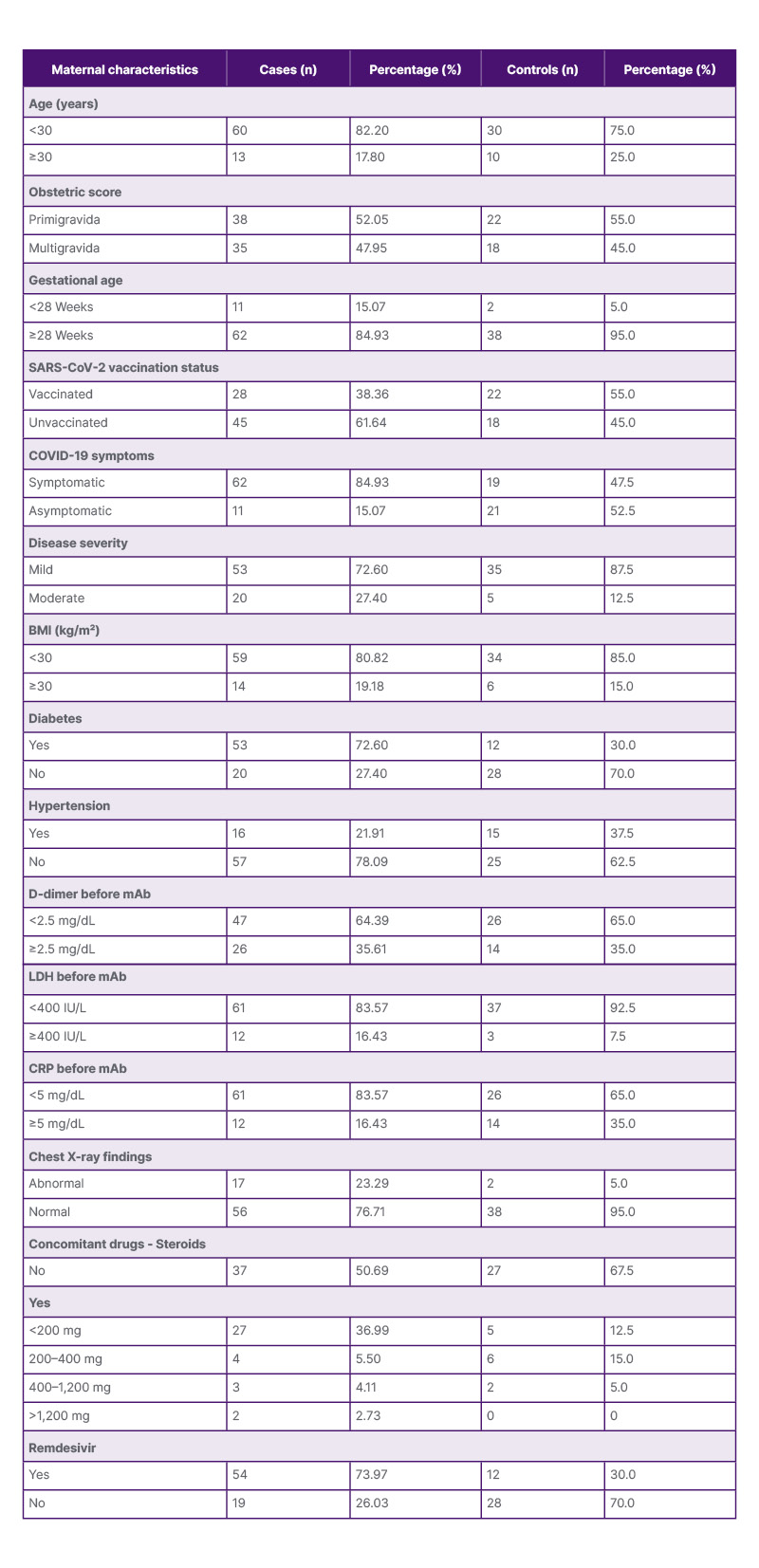
Table 1: Comparison of maternal characteristics in cases and controls.
CRP: C-reactive protein; LDH: lactate dehydrogenase; mAb: monoclonal antibody.
Primigravidas constituted 52.05% of the cases and 55.00% of the controls. Regarding vaccination status, 61.64% of cases and 45.00% of controls were unvaccinated, 28.77% of cases and 40.00% of controls had received one dose, and 9.59% of cases and 15.00% of controls had received two doses.
Disease severity at presentation was mild in 72.60% of cases and 87.50% of controls, while moderate disease was observed in 27.40% of cases and 12.50% of controls (p=0.068). Diabetes was more prevalent among cases than controls (72.60% versus 30.00%, p=0.00).
mAb was administered within 4 days of symptom onset in 78.08% of cases (57/73) and at ≥4 days in 21.91% (16/73). Remdesivir was given to 73.97% of cases and 30.00% of controls. Steroids were not administered in 50.69% of cases and 67.50% of controls. Cumulative methylprednisolone dose >400 mg was given in 6.84% of cases and 5.00% of controls (Table 1).
For laboratory markers, among cases, 16.43% had elevated LDH, 16.43% had elevated CRP, and 35.61% had elevated D-dimer before mAb. Among controls, 7.5% had elevated LDH, 35.0% had elevated CRP, and 35.0% had elevated D-dimer. After mAb administration, D-dimer normalised in 93.15% of cases. Chest X-ray had abnormal findings in 23.29% of cases (before mAb) and in 5.00% of controls (Table 1).
Primary Outcomes
Disease progression occurred in 17.50% of controls versus 5.48% of cases. After adjusting for diabetes, the protective effect of monoclonal antibody administration against disease progression remained significant (adjusted odds ratio [OR]: 0.24, 95% CI: 0.06–0.91, p=0.035; Table 2).
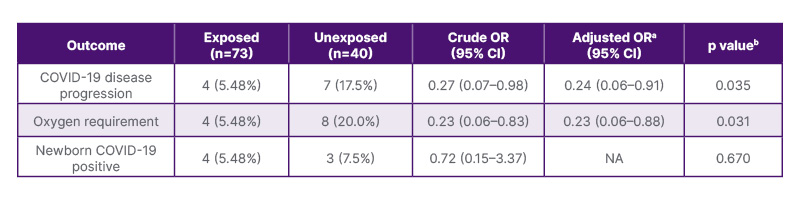
Table 2: Outcome variables.
aAdjusted for diabetes.
bp value statistically significant at 5.0% level by using chi-square test.
NA: not applicable; OR: odds ratio.
Oxygen was required in 5.47% of cases compared with 20.00% of controls. The adjusted OR for oxygen requirement was 0.23 (95% CI: 0.06–0.88; p=0.031; Table 2).
Among those requiring oxygen, 12.5% of controls needed non-invasive ventilation and 5.0% invasive ventilation. Among cases, 2.74% required non-invasive ventilation, and none required invasive ventilation (Table 3).
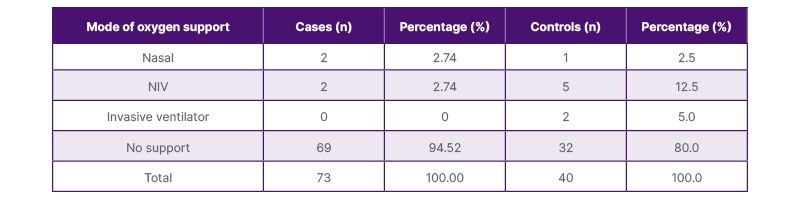
Table 3: Comparison of oxygen requirement.
NIV: non-invasive ventilation.
Newborn COVID-19 positivity was 7.50% in controls versus 5.48% in cases (p=0.670; Table 2).
DISCUSSION
On 14th May 2021, the FDA included pregnancy as a qualifying condition for anti-spike mAbs. Guidelines from the National Institutes of Health (NIH), American College of Obstetricians and Gynecologists (ACOG), and Society for Maternal-Fetal Medicine (SMFM) have included pregnant women with risk factors as eligible for mAb therapy.11,12 However, widespread adoption was limited by a lack of clinical data in pregnancy. Available data are limited to retrospective case series and case reports.7-9 These studies suggested that anti-spike mAbs may prevent progression to severe disease in antenatal patients, with no observed adverse events. However, none included a control group. The authors’ study is the first prospective comparative cohort study of CAS and IMD in high-risk pregnant women with COVID-19.
In the authors’ study, mAb administration was associated with less disease progression (5.48% versus 17.50%; adjusted odds ratio: 0.24; p=0.035) and lower oxygen requirement (5.47% versus 20.00%; adjusted OR: 0.23; p=0.031). These associations persisted after adjustment for diabetes. Thilagar et al.7 reported no COVID-19 progression in 51 pregnant women receiving mAb, but lacked a comparator.7 The authors’ study extends this by including a control group.
The higher frequency of remdesivir use in the exposed group (73.97% versus 30.00%) represents a potential confounder that could independently influence outcomes. Although the authors adjusted for diabetes, they could not adjust for remdesivir due to limited outcome events. Therefore, their results should be interpreted as demonstrating an association rather than causation.
After mAb administration, D-dimer normalised in 93.15% of cases, suggesting that mAb may reduce inflammatory markers. Newborn COVID-19 positivity did not differ significantly between groups (p=0.670). No hypersensitivity reactions occurred, consistent with prior reports. However, the total number of exposed pregnant women in the literature remains small, precluding firm conclusions about safety.
A cost-effectiveness analysis by Ruggeri et al.13 suggested that mAbs may reduce costs and hospital resource use, but the study did not focus on pregnant women. The authors’ institution provided free care, so cost-effectiveness was not assessed.
Limitations
- Observational design with historical controls carries risk of temporal bias, and the authors attempted to minimise this by defining a clear control period before mAb availability and confirming no other protocol changes.
- Substantial baseline imbalance in remdesivir use (73.97% in cases versus 30.00% in controls) could partly explain better outcomes in the exposed group. Due to small event numbers, the authors could not adjust for remdesivir.
- Modest sample size and few outcome events (11 for progression, 12 for oxygen) precluded extensive multivariable adjustment or propensity score matching.
- Residual confounding by other unmeasured factors (e.g., socioeconomic status, timing of presentation) cannot be excluded.
- Neonatal outcomes beyond SARS-CoV-2 status (birth weight, preterm delivery, neonatal ICU admission, respiratory morbidity, breastfeeding) were not systematically collected.
- The study was conducted during the delta wave, so the findings do not apply to Omicron sublineages, which are not neutralised by CAS and IMD.
CONCLUSION
In this prospective observational cohort study, administration of CAS and IMD was associated with reduced COVID-19 progression and lower oxygen requirement in high-risk antenatal patients after adjusting for diabetes. Nevertheless, due to the observational design, modest sample size, and higher concomitant remdesivir use in the exposed group, causal claims of effectiveness cannot be made. The findings suggest a potential benefit that warrants confirmation in larger, randomised, or better-controlled studies. Comprehensive neonatal follow-up should be included in future research. Moreover, CAS and IMD do not neutralise Omicron sublineages, limiting generalisability to current variants.