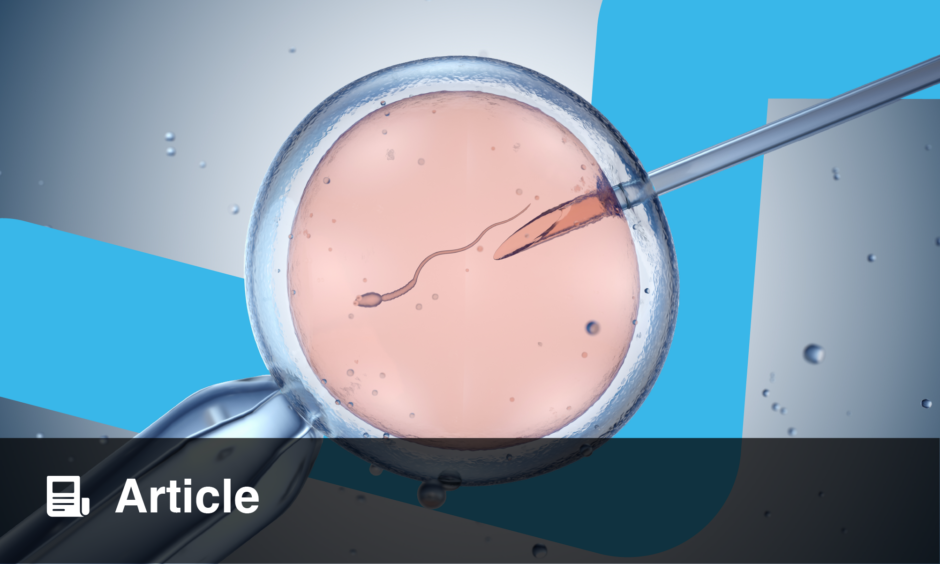
THE USE of a hyaluronic acid (HA)-enriched embryo transfer medium did not improve live birth rates compared with standard transfer medium in women undergoing single blastocyst transfer, according to findings from a multicentre randomised controlled trial presented at the 42nd Annual Meeting of the European Society of Human Reproduction and Embryology (ESHRE).
HA-enriched Transfer
HA-enriched transfer media, such as EmbryoGlue®, are widely used in assisted reproductive technology based on evidence suggesting they may enhance embryo implantation. However, robust data from large randomised trials remain limited, particularly in the setting of single blastocyst transfer.
To address this evidence gap, He Cai and colleagues conducted a multicentre, double-blind randomised controlled trial across four IVF centres in China. Between September 2024 and April 2025, 865 women undergoing IVF or ICSI with planned single fresh or vitrified-warmed blastocyst transfer were randomised to receive either EmbryoGlue® or a standard low-HA culture medium before embryo transfer.
No Improvement in Live Birth Rates
Among the 865 participants, 435 received HA-enriched medium and 430 received the standard medium. Live birth occurred in 51.5% of women in the HA group compared with 47.7% in the control group, a difference that did not reach statistical significance (risk ratio: 1.08; 95% CI: 0.95–1.23; P=0.261).
Similarly, no significant differences were observed in biochemical pregnancy rates (70.3% versus 65.1%), clinical pregnancy rates (63.0% versus 57.2%), or miscarriage rates (11.5% versus 9.3%). One ectopic pregnancy occurred in the control group, and no major maternal or neonatal complications were reported in either group.
Subgroup analyses showed consistent findings regardless of whether embryos were transferred fresh or frozen, maternal age, preimplantation genetic testing status, blastocyst quality, or whether patients were undergoing their first or a repeat embryo transfer.
Findings Challenge Routine Use
The researchers noted that the control medium contained a low concentration of HA, which may have reduced differences between the study groups and limited the ability to detect a treatment effect. Although embryologists could not be blinded because of the differing viscosity of the transfer media, participants and treating clinicians remained blinded throughout the trial, and standardised laboratory protocols were used to minimise bias.
The findings suggest that routine use of HA-enriched embryo transfer medium is unlikely to improve live birth or pregnancy outcomes in an unselected IVF population undergoing single blastocyst transfer. The authors propose that future research should focus on identifying patient groups that may still benefit from HA supplementation, including women with recurrent implantation failure.
Reference
Cai H et al. The efficacy of hyaluronic acid enriched embryo transfer medium in women undergoing single blastocyst transfer: a multicentre randomised controlled trial. Presentation L26-O-310. ESHRE Congress, 5–8 July, 2026.
Featured Image: Viacheslav Yakobchuk on Adobe Stock
Viacheslav Yakobchuk on Adobe Stock
- Author: