Abstract
Background: The endometrium functions as an active immunological organ, where cytokines modulate local inflammatory responses essential for implantation. A subtle equilibrium between pro- and anti-inflammatory mediators, such as interleukins, is required for synchronised embryo–endometrial dialogue. Alterations in this cytokine milieu may compromise endometrial receptivity and contribute to primary infertility, even in the absence of structural or hormonal abnormalities.
Aims: To assess the endometrial cytokine profile of the endometrial fluid in women with primary infertility.
Methods: A prospective cohort study was conducted at the Department of Obstetrics and Gynecology, Nicolae Testemitanu State University of Medicine and Pharmacy Chisinau, Moldova. The protocol of this study was approved by the Research Ethics Committee of this institution (no. 79/62 of 26.04.2017). Patients signed informed consent for participation in the research. The study included 96 patients divided into two groups. The study group (L1) included 48 patients with the established diagnosis of primary infertility and the control group (L0) included 48 fertile patients. Endometrial biopsy samples were collected during the proliferative phase of the menstrual cycle using the suction curette Pipelle de Cornier (CooperSurgical, Trumbull, Connecticut, USA).
Results: The level of IL-1β was considerably increased in the L1 group, with a median of 679.3 pg/mL. In the L0 group, the median level was 210.5 pg/mL, with a range between 16.5–3,150.8 pg/mL (p<0.001). The median value of IL-4 in the study group was 201.8 pg/mL, with values ranging from 92.8–415.6 pg/mL. In the control group, the median was of 188.0 pg/mL, with a range between 56.6–420.7 pg/mL (p=0.3). In contrast, IL-8 levels were significantly higher in the L1 group. The median was of 665.6 pg/mL and values ranged from 141.9–3,528.4 pg/mL. In the L0 group, the median value was 473.3 pg/mL, with a range between 126.5–3,401.6 pg/mL (p=0.014). For IL-10, an anti-inflammatory cytokine, no significant differences were observed between the two groups. In the L1 group, the median was 182.4 pg/mL and values ranged from 122.4–254.3 pg/mL. In the L0 group, the median was 181.0 pg/mL with a range between 136.5–257.5 pg/mL (p=0.9).
Conclusions: In this study, the authors concluded that the levels of proinflammatory cytokines in the endometrial fluid, such as IL-1β and IL-8, were higher in patients with primary infertility than in the control group. The levels of anti-inflammatory cytokines (IL-10 and IL-4) did not show any statistically significant differences between the groups.
Key Points
1. Primary infertility remains a major reproductive health challenge, and identifying endometrial inflammatory biomarkers may improve understanding of implantation failure and contribute to more accurate diagnosis and individualised patient management.2. This cohort study evaluated the concentrations of IL-1β, IL-4, IL-8, and IL-10 in endometrial fluid from women with primary infertility and fertile women to investigate local immune alterations associated with infertility.
3. Women with primary infertility demonstrated significantly higher endometrial IL-1β and IL-8 concentrations, supporting the presence of a pro-inflammatory endometrial environment that may contribute to infertility.
BACKGROUND
In the human endometrium, a complex system operates to prevent the risk of infection while, at the same time, enabling blastocyst acceptance when pregnancy occurs.1-5 In this context, the endometrium functions as a tertiary lymphoid organ, playing a central role in uterine immune surveillance.6,7 Remarkably, the endometrium also employs mechanisms of acute inflammation during hormonally regulated physiological processes, including menstruation and embryo implantation. These episodes of acute inflammation are rapidly resolved, thereby preventing tissue scarring and functional impairment. Although critical active processes involved in the resolution of inflammation have been described in other tissues and are clearly relevant to endometrial physiology and pathology, the mechanisms occurring within the endometrium remain largely insufficiently investigated.5,8-10
The immune component of the female genital tract mucosa varies across different regions of the reproductive tract and is predominantly represented by T lymphocytes, macrophages/dendritic cells, natural killer cells, neutrophils, and mast cells.5,11 Macrophages (CD68+), plasma cells (syndecan-positive), and B lymphocytes are present in the endometrium throughout all phases of the menstrual cycle, although in relatively low numbers.12,13 The innate and adaptive immune systems of the endometrium are regulated by steroid hormones. For instance, progesterone induces a local Th2-type cytokine response within the uterus, characterised by increased levels of IL-4, IL-5, and IL-15, along with downregulation of the IL-13 α2 receptor, which acts as a negative regulator of the anti-inflammatory cytokine IL-13 and as a potent inhibitor of the Th2 response.1,14 The Th2 response is believed to counterbalance proinflammatory processes within the endometrium that could otherwise lead to embryo rejection.15,16
Steroid hormone-driven alterations in endometrial chemokine production influence the migration of leukocytes from the bloodstream into the reproductive tract. Furthermore, the actions of progesterone are essential for establishing the overall immunosuppressive phenotype characteristic of the receptive endometrium.2 During the secretory phase, a marked recruitment of leukocytes into the endometrium occurs, originating from perivascular regions surrounding the spiral arterioles and glandular epithelium.1,17 Progesterone-induced changes in endometrial cytokine and chemokine production contribute significantly to this recruitment process. Cytokines such as IL-1, IL-11, IL-15, leukaemia inhibitory factor (LIF), and transforming growth factor beta (TGF-β) regulate leukocyte migration toward the endometrium.18,19
IL-1β is one of the major mediators of the physiological inflammatory response within the endometrium and plays an important role in embryo implantation. IL-1β secretion reaches its maximum during the implantation window. It stimulates the expression of molecules required for blastocyst adhesion, including integrins, LIF, and IL-6; activates intracellular signalling pathways in stromal and epithelial cells to prepare the endometrium for implantation; and contributes to the decidualisation process. During the proliferative phase, IL-1β promotes stromal and epithelial cell proliferation and regulates angiogenesis through stimulation of vascular endothelial growth factor expression.19,20
IL-8 (CXCL8) is a CXC chemokine best known for its potent chemoattractant activity toward neutrophils and T lymphocytes. In addition, it possesses mitogenic properties and plays a key role in angiogenesis in vivo. These processes are fundamental for endometrial shedding and repair. IL-8 displays angiogenic properties comparable to those of vascular endothelial growth factor, stimulating endothelial cell proliferation, inducing neovascularisation, and contributing to endometrial regeneration during the proliferative phase. IL-8 expression in endometrial epithelial cells is upregulated under hypoxic conditions and by prostaglandin E2, with a synergistic increase observed when both factors are present simultaneously.2,21
IL-4 is a cytokine predominantly secreted by Th2 cells, uterine natural killer cells, mast cells, and macrophages. It plays a central role in polarising the immune response toward an anti-inflammatory profile, which is particularly important during the peri-implantation period and throughout early pregnancy. Within the endometrium, IL-4 contributes to the establishment of a tolerogenic microenvironment favourable for implantation and pregnancy maintenance. IL-4 is one of the principal cytokines responsible for the differentiation of CD4+ lymphocytes into the Th2 subset, while simultaneously inhibiting proinflammatory Th1 activity.3,22
IL-10 is an anti-inflammatory cytokine produced within the endometrium by resident macrophages, dendritic cells, regulatory T cells (Tregs), as well as stromal and epithelial cells under specific conditions. Its main function is to limit excessive inflammation and maintain immune tolerance compatible with endometrial receptivity and pregnancy. IL-10 demonstrates a transient peak during the implantation period, which is necessary for trophoblast invasion.13 Studies indicate that IL-10 promotes a Th2/Th1 profile considered protective for implantation and pregnancy through suppression of the Th1 immune response. In addition, IL-10 limits excessive extracellular matrix degradation, supports controlled stromal remodelling, and contributes to appropriate decidualisation and vascular integrity by promoting organised angiogenesis without destructive inflammation.3,23
An increased Th2/Th1 ratio is recognised as physiological for endometrial receptivity and maternal tolerance toward the embryo. IL-4 reduces the expression of proinflammatory cytokines such as IL-1β, TNF-α, and IFN-γ, stimulates IL-10 production, and promotes an anti-inflammatory environment. Moreover, it contributes to the regulation of chemokines involved in the recruitment of immune cells supportive of implantation, including M2 macrophages and Tregs.3,21,23
In a healthy endometrium, these four interleukins function as a dynamic ‘brake-and-accelerator’ system. IL-1β and IL-8 exert predominantly proinflammatory effects, increasing during the peri-implantation period and inducing matrix metalloproteinases, prostaglandins, angiogenesis, and recruitment of neutrophils and macrophages. These actions facilitate trophoblast invasion and spiral artery remodelling. In contrast, IL-4 and IL-10 exert anti-inflammatory and regulatory effects, increasing after blastocyst implantation. They inhibit excessive Th1/Th17 activity, promote a Th2/Treg immune profile, stabilise implantation, and protect the maternal–fetal unit from immune rejection.3,16,24
AIMS
The aim of this study was to assess the endometrial cytokine profile of the endometrial fluid in women withprimary infertility.
METHODS
The authors conducted a prospective study, which included 96 patients divided into two groups. The study group included 48 patients with primary infertility and a control group consisting of 48 fertile patients. The inclusion criteria for the study group were patients suffering from primary infertility with indications for laparoscopy and hysteroscopy, age 20–40 years, lack of hormonal therapy and antibiotic therapy in the last 6 months, lack of intrauterine manipulations in anamnesis, and research participation agreement. The inclusion criteria for the control group were patients who have had a delivery with a living fetus in the last 2 years and who do not breastfeed, patients without a complicated reproductive gynaecological history (infertility, spontaneous or missed abortion), lack of hormonal treatment and antibiotic therapy over the past 6 months, and research participation agreement. Exclusion criteria from the research were patients with acute genital infection, age <20 years and > 40 years, patients suffering from congenital malformations of the uterus, patients who had prior intrauterine surgical manipulations, atypical endometrial hyperplasia, and patients’ refusal for voluntary participation in research.
The study was approved by the Research Ethics Committee of the State University of Medicine and Pharmacy Nicolae Testemitanu, Chisinau, Moldova (No. 79/62 of 26.04.2017).Patients have signed informed consent to participate in the research.
In both groups, the authors performed endometrial biopsy in the proliferative phase with endometrial suction curette Pipelle de Cornier (CooperSurgical, Trumbull, Connecticut, USA), and assessed pro- and anti-inflammatory cytokines IL-1b, IL-8, IL-10, and IL-4. Statistical data processing was performed using Microsoft Excel 2016 (Microsoft, Redmond, Washington, USA) and SPSS 20 (IBM, Armonk, New York, USA). Quantitative variables were analysed using the Wilcoxon rank-sum test. P values <0.05 were considered statistically significant.
FINDINGS
The patients included in the study were evenly distributed between the two study groups (Table 1). No statistically significant differences in age distribution were identified between the groups (χ²=6.94; p=0.076).
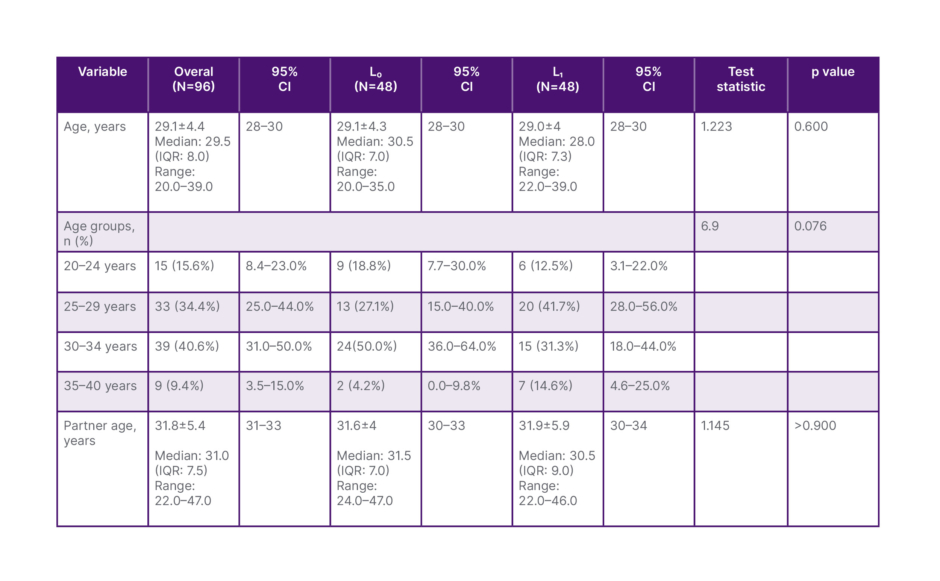
Table 1: Demographic characteristics according to primary infertility status.
IQR: interquartile range.
The analysis of endometrial immunological parameters revealed significant differences between patients with primary infertility (L1 group; N=48) and fertile patients (L0 group; N=48) for certain proinflammatory cytokines, suggesting a distinct immunological profile associated with primary infertility. IL-1β levels were significantly higher in the L1 group compared with the L0 group. In the study group (L1), the median value of IL-1β concentration was 679.3 pg/mL (interquartile range [IQR]: 1,022.6) and a range between 170.6–4,375.4 pg/mL. In the control group (L0), the median level was 210.5 pg/mL (IQR: 302.5) and values ranged from 16.5–3,150.8 pg/mL. The difference between the two groups was highly statistically significant (p<0.001; (Figure 1A ).
For IL-10, an anti-inflammatory cytokine, no significant differences were observed between the two groups. In the L1 group, the median of IL-10 concentration was 182.4 pg/mL (IQR: 24.9) and values ranged from 122.4–254.3 pg/mL. In the L0 group, the median was 181.0 pg/mL (IQR: 53.5) and ranged between 136.5–257.5 pg/mL. The difference was not statistically significant (p=0.9; (Figure 1B ).
IL-4 levels were comparable between the two groups. In the L1 group, the median was 201.8 pg/mL (IQR: 168.3) and values ranged from 92.8–415.6 pg/mL. In the L0 group, the median was 188.0 pg/mL (IQR: 136.1) with a range between 56.6–420.7 pg/mL. The difference between the groups did not reach statistical significance (p=0.3; (Figure 1C ).
In contrast, IL-8, a proinflammatory cytokine involved in neutrophil recruitment and local inflammatory processes, demonstrated significantly higher levels in the study group. In the L1 group, the median IL-8 concentration was 665.6 pg/mL (IQR: 990.4) and values ranged from 141.9–3,528.4 pg/mL. In the L0 group, the median value was 473.3 pg/mL (IQR: 379.9) and ranged between 126.5–3,401.6 pg/mL. The difference was statistically significant (p=0.014; (Figure 1D ).
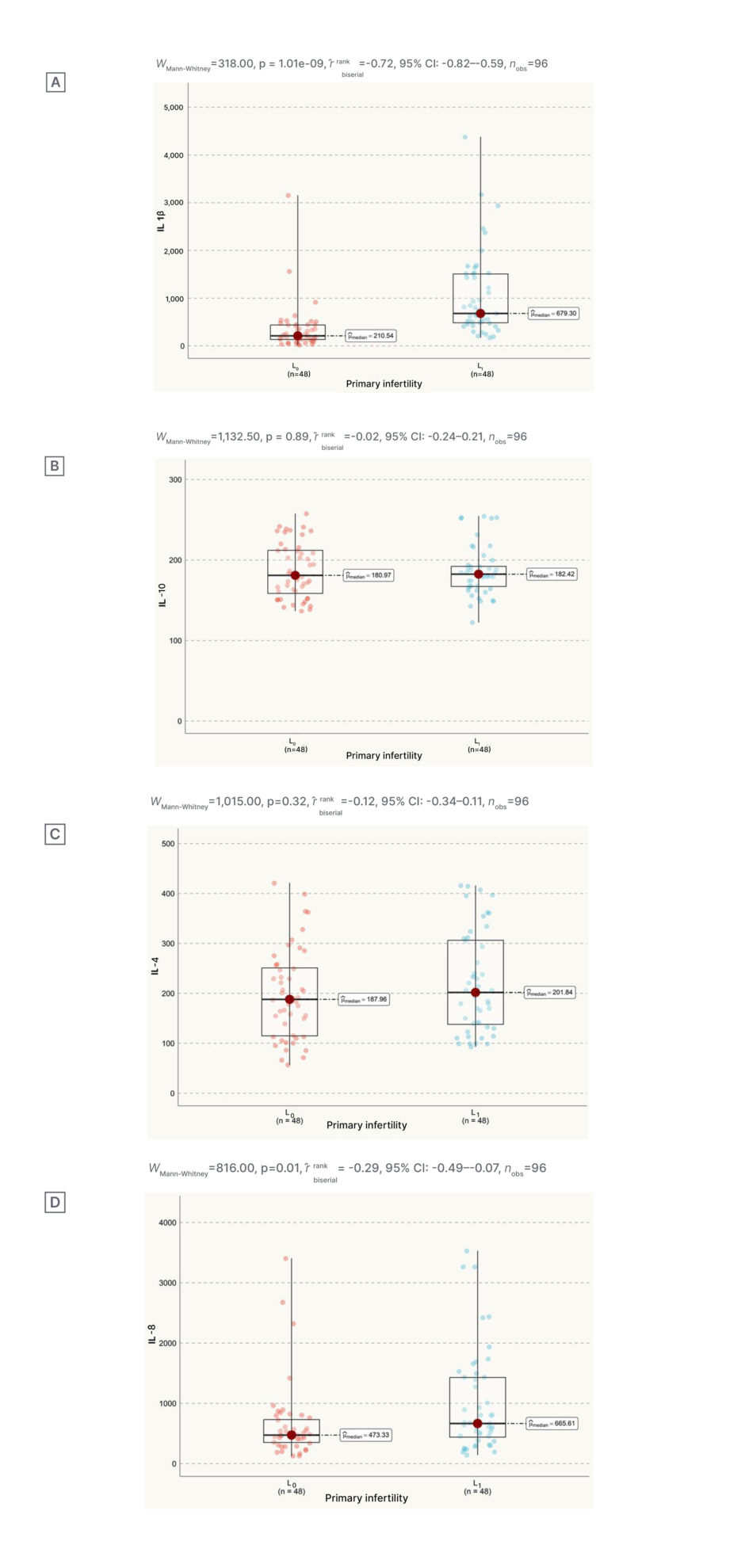
Figure 1: Levels of IL-1β, IL-10, IL-4, and IL-8.
A) Levels of IL-1β in the endometrium, B) levels of IL-10 in the endometrium, C) levels of IL-4 in the endometrium, D) levels of IL-8 in the endometrium.
DISCUSSION
A challenge in reproductive immunology and embryo implantation research is the development of more precise approaches to better understand the immunological mechanisms involved in successful implantation and pregnancy establishment. The authors’ study demonstrated that patients with primary infertility exhibit altered endometrial immune parameters compared with fertile controls, particularly significantly increased levels of IL-1β.
The results of the authors’ study demonstrate elevated levels of pro-inflammatory cytokines in women with primary infertility compared with fertile controls. These findings may reflect an altered Th1/Th2 balance at the endometrial level, suggesting the presence of an immune environment characterised by increased inflammatory signalling. Similar patterns of immune dysregulation have also been described in chronic inflammatory disorders, including rheumatoid arthritis and inflammatory bowel disease.25 Predominance of a Th1-oriented immune profile may promote recruitment and activation of endometrial macrophages, accompanied by increased production of inflammatory mediators such as IL-1, TNF-α, and IL-6, thereby contributing to maintenance of chronic inflammatory signalling withinthe endometrium.25,26
From a clinical perspective, these findings suggest that assessment of the endometrial inflammatory profile may become a useful adjunctive tool in the evaluation of women with primary infertility, particularly in cases where standard diagnostic investigations fail to identify a clear aetiology. The significantly elevated concentrations of IL-1β and IL-8 observed in the authors’ cohort support the hypothesis that a persistent pro-inflammatory endometrial microenvironment may contribute to impaired implantation and reproductive failure. Future studies should investigate whether cytokine profiling could be integrated into patient stratification models or used to identify subgroups of patients who may benefit from targeted therapeutic interventions.
The translational implications of these findings are also relevant for the development of novel therapeutic approaches aimed at modulating endometrial inflammation. Previous studies have explored different strategies to improve endometrial immune balance, including anti-inflammatory therapies, immunomodulatory approaches, correction of microbiome dysbiosis, and personalised interventions targeting implantation failure. However, evidence remains heterogeneous, and no standardised therapeutic protocols currently exist for cytokine-guided treatment selection.25-28 Therefore, larger prospective studies are needed to determine whether normalisation of the endometrial inflammatory profile can improve reproductive outcomes.
Taken together, the authors’ findings support the concept that primary infertility may be associated not only with endocrine or anatomical factors, but also with a dysregulated local immune environment. Better characterisation of these inflammatory pathways may contribute to the development of more individualised diagnostic and therapeutic strategies in reproductive medicine.
CONCLUSIONS
Overall, patients with primary infertility exhibited an endometrial immunological profile characterised by significantly increased levels of the proinflammatory cytokines IL-1β and IL-8, in the absence of significant differences in the anti-inflammatory cytokines IL-10 and IL-4. This proinflammatory imbalance suggests the presence of a persistent inflammatory endometrial microenvironment, potentially involved in impaired endometrial receptivity and in the pathogenic mechanisms underlying primary infertility.