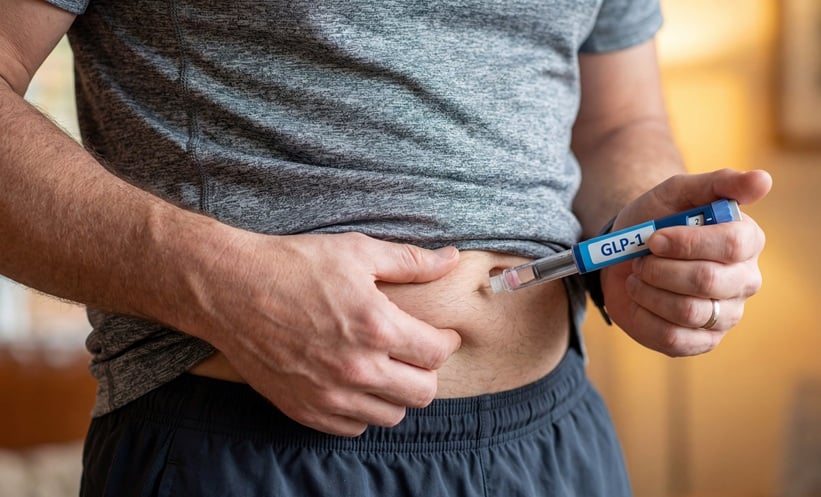
NEW DATA has shown that concurrent initiation of tirzepatide and biologic therapy is associated with better patient-reported outcomes in obese patients with psoriatic arthritis, with nearly triple the rate of symptom control compared with biologics alone.
Biologics and Weight Loss Drugs in Psoriatic Arthritis
Obesity has been shown to affect up to 45% of patients with psoriatic arthritis and has been independently associated with reduced biologic efficacy and lower rates of minimal disease activity. GLP1s have been recognised to possess immunomodulatory properties beyond metabolic effects, yet their impact on psoriatic arthritis outcomes when combined with biologics has remained largely unknown.
Propensity Score-Matched Study Design
Researchers conducted a propensity score-matched comparative study at tertiary care rheumatology centres. Patients with psoriatic arthritis and a body mass index of 30 kg/m² or higher, or 27 kg/m² or higher with a weight-related comorbidity, who initiated tirzepatide alongside biologic therapy were prospectively enrolled from January 2025, starting at 2.5 mg per week and uptitrated to 5 mg per week after one month. Controls initiating biologics alone between 2021 and 2025 were matched 1:2 on body mass index, disease duration, and disease activity and psoriasis severity scores.
Outcomes at six months included disease activity, symptom state, functional status, skin clearance, pain, and C-reactive protein, with continuous outcomes also analysed using adjusted and mixed models.
Tirzepatide Combination Linked to Better Symptom Control
Thirty-one patients completed six months and were matched to 62 controls, with well-balanced baseline characteristics. The tirzepatide group showed greater reductions in body mass index (−2.9±2.0 vs +0.4±1.2 kg/m², p<0.001) and lower C-reactive protein (4.2±3.8 vs 7.7±3.0 mg/L, p<0.001).
Patient-acceptable symptom state was achieved by 48% of the tirzepatide group versus 21% of controls (odds ratio [OR] 3.44, 95% CI 1.38 to 8.63, p=0.009), functional status targets by 42% versus 18% (OR 3.27, 95% CI 1.26 to 8.44, p=0.022), and skin clearance targets by 74% versus 52% (OR 2.59, 95% CI 1.03 to 6.56, p=0.045).
Baseline-adjusted analyses confirmed significant differences favouring tirzepatide for body mass index, C-reactive protein, patient-reported impact, and joint disease activity.
Implications for Managing Obesity in Psoriatic Arthritis Care
These findings have suggested that concurrent tirzepatide and biologic initiation in obese patients with psoriatic arthritis is associated with significantly better patient-reported outcomes, skin disease control, and inflammatory markers at six months. As this was an observational study, causality cannot be established. The authors have suggested these results support addressing obesity pharmacologically at the time of biologic initiation.
Reference
Venerito V et al. Concurrent initiation of tirzepatide and biologics improves patient-reported outcomes in obese psoriatic arthritis: a propensity score-matched study. RMD Open. 2026;12:e006830.
Featured image: Daria on Adobe Stock