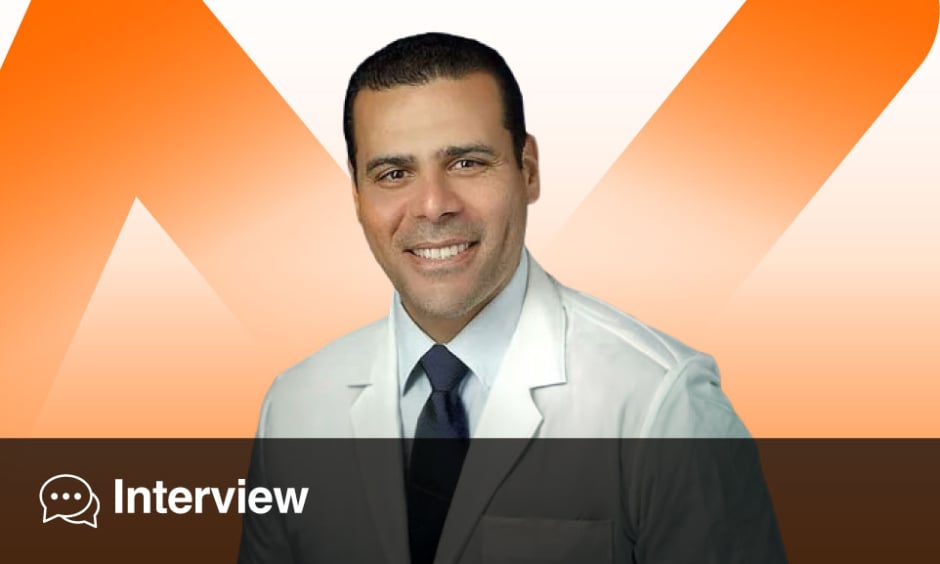
Ahmed Ghazi Director and Associate Professor of Urology, Surgical Learning and Innovation Center of Excellence (SLICE), Lutherville; Director of Minimally Invasive & Robotic Surgery, The Johns Hopkins Hospital Brady Urological Institute, Baltimore, Maryland, USA
Citation: EMJ Urol. 2026;14 [Suppl 1]:13-16 https://doi.org/10.33590/emjurol/84F63MC5

Robotic surgery has urology over the past 2 decades. Looking ahead, what do you think will define the next major leap in robotic innovation?
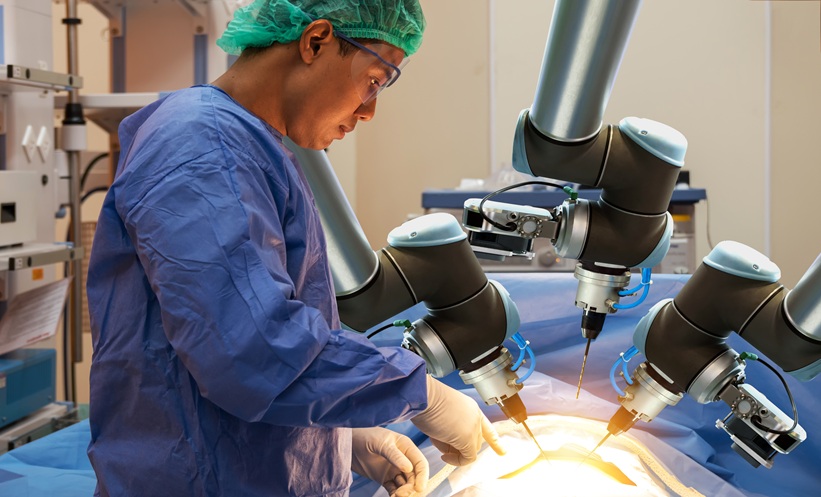
I think robotic innovation is going to revolve around more of a software application rather than a hardware application. Robotic surgery has really pushed the limits of how we perform surgery and how we find postoperative recovery, but we have not advanced at a similar pace in the field intraoperative guidance. For example, we remove the entire prostate for one or two cancerous lesions. The reason is not that we can’t cut it out, we just don’t know where the cancer is. So, I think the idea of intraoperative navigation and intraoperative cancer localisation would be very interesting from a robotic standpoint. Having those tools will not transform how we do surgery, but it will transform the outcomes of our surgery. However, I don’t think we can send patients home any sooner; I think we’ve hit the limit there. I do believe that the next thing to do now is improve intraoperative surgical guidance.
Many new technologies promise to make surgery more precise or efficient. Which innovations do you believe have had the greatest real-world impact on patient care, and which are still waiting to prove their value?
Within robotic surgery, I do believe it is the miniaturisation of our platforms, regardless of what type they are. Even in the regular multi-port systems, the arms are getting slimmer: we went from 10 mm to 8 mm, then 5 mm. Now we have a single-port system, and reducing the amount of tissue damage to get to the target organ is where I think robotics is really showing a huge benefit. I think we’re in that phase now, which is further miniaturisation of what we can do.
On the other hand, I think looking at how we could democratise availability of experts within robotic surgery is essential. There is a huge push towards telesurgery, but there is a significant amount of ethics, rules, and regulations involved, making it very difficult for us to standardise it worldwide. However, the fact that there are existing platforms now coming along as a standard is pushing the other platforms to become standard. A very good example is in cars. The rear-view mirror or rear-view camera became standard in some cars, and now, because it’s safer, it has become standard in every car. So, I think the idea that we are starting to add things to our armamentarium that have now become almost standard is really starting to guide the industry towards improving access to surgery.
AI is increasingly being discussed in surgical practice. Where do you see AI making the greatest contribution to robotic urology over the next decade?
AI is really improving the way that we actually do robotic surgery. There’s patient selection, and there’s the ability to predict nomograms on the outcomes: AI is doing all of that, but let’s talk about the actual operative procedure itself. AI is something that we have to be very careful with in terms of how we frame it. It essentially takes a big bunch of data, organises it in a certain way, and gives us an explainable outcome at the end. However, sometimes it’s not explainable. There was a landmark paper that looked at the differences between surgeons who have better outcomes when performing part of a robotic procedure when undertaking an anastomosis, and found out that moving the fourth arm more frequently caused fewer complications. It doesn’t translate to something clinical to us, but it does imply that moving more efficiently leads to fewer complications. We have to be very careful about how we interpret AI. I think AI’s biggest push is going to be about collecting all the data that we accumulate as experts. As an expert, you see subtle things in the field. You start to understand how close you can cut to the cancer and avoid a critical structure nearby without seeing the actual cancer, that is what we call surgical expertise, translated through thousands of cases. I think AI needs to take that from the surgeon’s brain and explain it in a way that somebody who doesn’t have over 1,000 procedures under their belt can understand, and so I think the biggest use of AI is going to be getting people to think like an expert. However, the amount of work required to do that is tremendous.
Do you foresee AI becoming an intraoperative assistant, or will its greatest value lie in preoperative planning and postoperative analysis?
We speak to our colleagues in the operating room and have discussions with them; if they’re not in the room, we go over things in our own minds. AI is never going to make a decision for you. Instead, it’s going to guide your thoughts and organise them in a way that makes it easier for you to interpret what the surgeon is visualising in real-time. In terms of having AI in the operating room, yes, I think that is an incredible application for it.
In terms of preoperative planning and postoperative analysis, AI has already proven itself in patient decision-making. When a patient comes to a surgeon or a radiation oncologist about their opinion, its always heavily biased towards their field. We have an inherent bias towards our own specialty when deciding what to do with our patients; however, AI can have a clean, clear understanding of what the patient needs and give them unbiased data. So, I think it’s essential in pre-operative patient selection and decision-making. Then, when the patient comes to you, you’re able to take all their data and present predictions for their positive margins, continence, functional outcomes, etc. That would be great because we cannot normally predict that.
What safeguards should be in place as AI becomes more integrated into surgical decision-making?
There should be full transparency. That’s the problem with AI: the results are sometimes not understandable. Therefore, we need to understand the process. That’s number one.
Number two, I think it should be highly regulated by a governing body. There must be guardrails so that it doesn’t become an industry-driven process.
Finally, it has to be based on patient consent. Patients should be able to opt out of including their data. Nobody will, but they have to have the choice.
Your work has explored surgical simulation and patient-specific rehearsal. How do you see these technologies changing the way surgeons prepare for complex procedures?
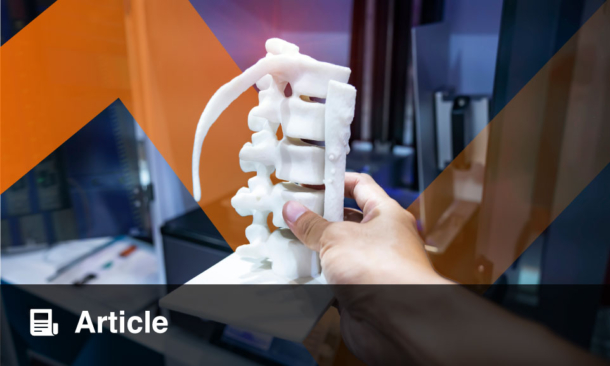
I’ve been working on surgical training, developing hydrogels, and developing curriculums for the last 2 decades. So, what is my ultimate goal? If we are able to have people learn a skill like robotic surgery or learn a new robotic platform within the comfort of their home; think about somebody putting on a pair of AI or virtual reality glasses and practicing the surgery. Imagine that I’m going to have a complex case tomorrow. I’m going to upload the scans, and I can rehearse various different scenarios which might occur during the operation and prepare for them. What we are building towards is really a tripartite mission: developing the ultimate and the best training platform, developing very accurate clinical assessments that can be meaningful to the trainee, and incorporating all of that into a translatable curriculum that improves patient outcomes. That is the culmination of all the work I’ve been doing: the simulation platform or our physical model. We developed something that’s very unique, very specific, and very realistic. In terms of assessments, we’re looking at not only accurate assessments, but automated ones. What is left is not building the curriculum, it’s the adoption of the curriculum. Training is a long process, but, unfortunately, it is being framed as a very short process, which is not possible. You don’t learn to drive a car in two sessions. You learn to drive a car over a longer period of time. Pilots do the same thing with planes. Robotic surgery shouldn’t be different, we just don’t have a credentialing body that forces us to do certain things in a certain way. Our goal is to make it easier for somebody to train, but there has to be a governing body.
How close are we to creating a true digital twin of a patient that could be used to rehearse surgery before entering the operating theatre?
We are there. We are able to create the anatomy and pathology very accurately, and AI is doing this a lot faster. So, manual segmentation has become automated now. The only problem is we have two barriers.
First, we only have the organ; we don’t have all the organs that surround it. We need to simulate the entire procedure, not only the critical component.
Second, we do not have the incentive to encourage people to do this, because everyone’s very busy and everybody thinks they’re an expert. And even the best expert still sees a case that is new to them here and there. As a result, nobody forces or encourages anybody to do this. There has to be an incentive, and my thought process is as follows: when you buy car insurance and you get a black box that measures your speed, that will reduce your premium. This is the same thing. If a surgeon agrees to take the time to do a rehearsal, they should be incentivised with a fee towards the case itself. The leading part shouldn’t be the patient or the physician; it should be the insurance, because, by doing this, they reduce the liability on the patient, which is to their benefit and to the patient’s benefit. Offering this would be an incentive to utilise the digital twins. So, we do have half of the digital play. We just need the other half. However, even if we had this other half, and I’ve been doing this long enough to say this, the problem is having people enforce it.
How can surgeons remain active drivers of innovation rather than just adopting technologies developed by others?
That is a very interesting question, and unfortunately it is not something you can change in a person. I see myself as somebody that gets a little bit mundane if I’m doing the same thing over and over again. So, I’m always looking for the best thing for my patient, whether that’s an approach, a technique, or a new robot, and that is where I feel satisfied that I have served my patients well.
I think the way to remain an active driver of innovation is to have a registry where patients are aware of surgeons’ outcomes. It’s like going in and seeing the surgeon’s track record, transparent to the patient. That will hold both accountable. So, I think the only way you can get people to innovate is to show that there are innovators and there are non-innovators. As a result of that, everybody will force you to become an innovator on some level.