Erdem Canda: Director, RMK AIMES Training & Conference Center; Department of Urology, Koç University Hospital, Istanbul, Türkiye
Citation: EMJ Urol. 2026;14[Suppl 1]:20-22 https://doi.org/10.33590/emjurol/UA350NP3

Southeastern Europe has seen remarkable growth in robotic urology over the past decade. How have you seen the field develop across the region, and what has driven that progress? What unique strengths does Southeastern Europe bring to the international robotic urology community?
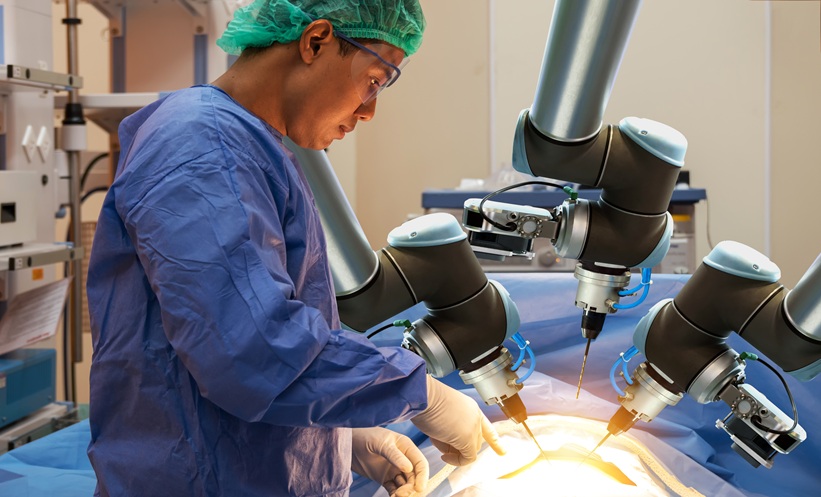
Robotic surgery has many advantages for the patients, including less bleeding, less complications, faster recovery, and early discharge from the hospital. In addition, it has many advantages for the surgeon, as one can operate in a comfortable sitting position, having 3D magnified vision with dexterity of the hands and being able to use four robotic arms. Both the patients and hospitals are aware of these advantages, so patients are demanding robotic surgery and hospitals invest in this technology. Robotic surgery is therefore expanding all over the world and also in Southeast Europe. In addition, we now have a younger generation trained in robotic surgery. As the number of robotic platforms increases and competition grows, costs seem to be decreasing, with different financial solutions offered by companies enabling many hospitals to reach one of these robotic systems.
Southeast Europe has a young generation who are now well trained with strong academic background and who are now able to reach the robotic systems that I think have the potential to lead their region.
Although access to robotic surgery has expanded, differences remain between countries. What do you see as the biggest barriers to achieving more equitable access across the region?
Cost might be the primary barrier. Robotic surgery seems to be more costly in the short term; however, considering the advantages of less bleeding, less complications, faster recovery, and early discharge from the hospital, its cost decreases significantly. I can now see that the cost of adopting robotic surgery is decreasing as more affordable robotic systems become available and manufacturers offer a range of financing options, enabling more hospitals to access this technology. I also see that, although some USA-based robotic surgery companies do not operate in every market, Chinese manufacturers are entering these markets with lower-cost systems and flexible financing models, allowing many more countries to adopt robotic surgical technology.
How can centres with more established robotic programmes support hospitals and surgeons who are just beginning their robotic journey?
As an example, at our training centre RMK AIMES, Istanbul, Türkiye, which is located in the same campus with Koç University Hospital, Istanbul, Türkiye, where I work as a faculty member in the department of urology, we organise many hands-on training courses using different training models in robotic urology, robotic gynaecology, robotic general surgery, and robotic thorax surgery in all levels, including beginner level, intermediate level, and advanced level, with different robotic systems that are available at our facilities. In addition, we offer robotic case observation in our operating rooms. In this way, trainees learn and observe lots of tips and tricks from our robotic surgical teams. We have structured robotic surgical training programmes that enable them to start and successfully proceed during their robotic surgery training journey.
What role do you see professional societies such as the South East Robotic Urology Surgeons (SERUS) playing in establishing regional standards for education, accreditation, and best practice in robotic urology?
Societies like SERUS gather colleagues from the region and give them the opportunity to share their experience and knowledge in the field of robotic surgery and speed up the whole process. In this way, more colleagues have access to training, exposure to experienced centres, and up-to-date knowledge. In addition, it opens the doors of academic collaboration and friendship. Stepwise education is accredited with high standards and offered to many colleagues. Fellowships are organised with many training opportunities. For colleagues in the region, it might be easier and less costly to join regional robotic training and academic activities such as those offered by SERUS. Many may not be able to join the European or North American meetings, events, congresses, and courses easily for many reasons.
SERUS has become an important platform for surgeons from Southeastern Europe. What was the original vision for the society, and how has that vision evolved?
SERUS is a collective organisation of robotic surgeons that was founded in 2024. Its primary objectives include exchanging expertise and information, fostering cooperation, and camaraderie among its members as well as with other societies, conducting collaborative research, and organising joint conferences and activities focused on the advancements in robotic urology.
Looking ahead, where would you like SERUS to be in 5 or 10 years?
We have established a SERUS editorial and advisory board composed of colleagues not only from Southeast Europe but also from all over the world, creating a strong academic and experienced team. Our first SERUS robotic multicentre and international collaborative study was presented by Ahmet Furkan Sarıkaya, Viransehir State Hospital, Sanliurfa, Türkiye, one of our active members, at the British Association of Urological Surgeons (BAUS) Congress in London this year. With this strong academic foundation and dedicated background, I think that SERUS will be organising many events, symposiums, courses, even congresses, and publishing papers within 5 years. Beyond that, I believe SERUS has the potential to become a leading robotic urology organisation in the region, working closely with the European Association of Urology Robotic Urology Section (ERUS), the North American Robotic Urology Symposium (NARUS), the Society of Robotic Surgery (SRS), the Society of Urologic Robotic Surgeons (SURS), and the Endourological Society.
What opportunities do you see for multicentre research and collaborative clinical studies within the region?
As I mentioned, our first SERUS robotic multicentre and international collaborative study was presented by Sarıkaya, one of our active members, during the BAUS Congress in London this year. Hopefully, the paper will be accepted and published in one of the peer-reviewed journals this year. We have already started to carry out multicentre research and collaborative clinical studies within the region. In SERUS, we have a very motivated and young group of colleagues who are willing to collaborate, and the potential is great and promising.
If you could leave delegates attending SERUS this year with one message about the future of robotic urology in Southeastern Europe, what would it be?
The future of robotic urology is bright and promising, and SERUS forms a global alliance for surgical precision. South East Europe has a great and young group of colleagues who are interested in technology and they will quickly get involved and progress in robotic surgery. Lastly, with the availability of less costly new robotic platforms on the market, access to robotic surgery will be easier both for patients and hospitals.