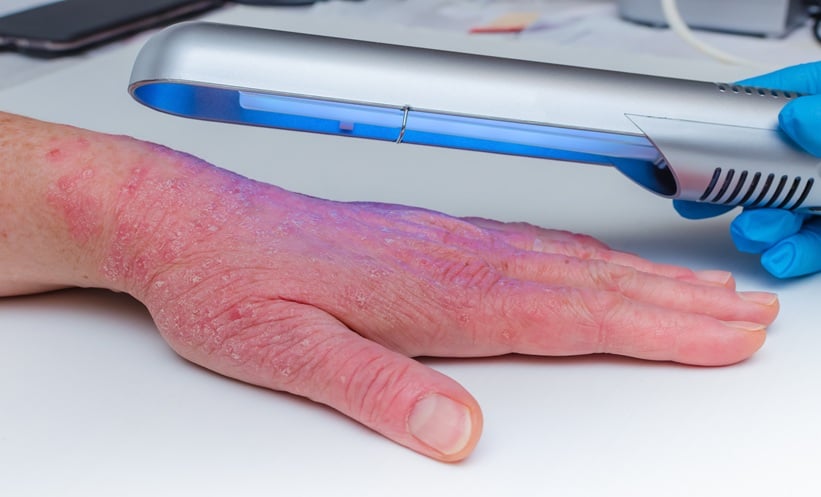
Phototherapy using narrowband ultraviolet B (NB-UVB) appears to be as effective in older adults with psoriasis as in younger patients, with a favourable safety profile, according to a retrospective multicentre study.
Researchers from Thailand analysed records from 397 patients treated across three phototherapy centres between January 2007 and June 2021. Of these, 73 patients (18.4%) were aged 60 years or older. The study aimed to compare treatment effectiveness, safety outcomes, and adherence between elderly and non-elderly individuals receiving whole-body NB-UVB therapy.
Comparable PASI Improvement Across Age Groups
Elderly patients presented with a higher burden of comorbid conditions, reflecting the expected complexity of managing psoriasis in later life. However, rates of psoriatic arthritis and nail involvement were similar between the two groups. Baseline disease severity, measured using the Psoriasis Area and Severity Index (PASI), was slightly higher in the elderly cohort (8.3 versus 7.6).
Despite requiring more treatment sessions on average (41 compared with 34 in younger patients), elderly individuals achieved comparable clinical benefit. Mean PASI improvement was 64.4% in the elderly group versus 67.9% in non-elderly patients, indicating no meaningful difference in therapeutic response.
NB-UVB Phototherapy Safety Profile Remains Favourable
Importantly, safety outcomes favoured the older population. Elderly patients experienced significantly fewer phototherapy-related burning reactions (6.8% versus 19.8%; P=0.009). The authors suggest that age-related differences in skin response or treatment tolerance may contribute to this finding. However, combination therapy with acitretin was associated with an increased risk of burning across the study population.
The analysis also identified factors associated with remission. A lower starting phototherapy dose (<330 mJ/cm²) was linked to a higher likelihood of achieving psoriasis remission, highlighting the importance of initial dosing strategy in clinical practice.
Implications for Treating Psoriasis in Older Adults
Overall, the findings support NB-UVB phototherapy as an effective and well-tolerated treatment option for psoriasis in older adults, despite higher comorbidity burden and slightly greater treatment exposure. The authors conclude that age alone should not be a barrier to phototherapy use in clinical decision-making, and that careful dosing may further optimise outcomes.
These results add to growing evidence that phototherapy remains a cornerstone therapy for psoriasis across age groups, including in geriatric populations where treatment tolerability is often a key consideration.
Reference
Chaiyabutr C et al. Effectiveness and safety of phototherapy in geriatric psoriasis: a retrospective multicenter study. Arch Dermatol Res. 2026;318:186.
Featured image: Iri-s on Adobe Stock
- Author: