Nicola Conran | State University of Campinas (UNICAMP), Brazil
Citation: EMJ Hematol. 2026;14[1]:53-54. https://doi.org/10.33590/emjhematol/K0D13N23

Your work at the State University of Campinas (UNICAMP), Brazil, has contributed significantly to the understanding of blood disorders, can you share what first drew you into this field of research?
Ever since I was an undergraduate, I have been fascinated by blood cells and how they respond immediately to biological events, driving systemic responses.
Later, when I saw how these cells were mediating and modulating blood disorders, such as sickle cell disease, I then realised how important they were for understanding these diseases and finding ways to improve patients’ lives.
Much of your research has focused on sickle cell disease and related conditions. How has the scientific understanding of these diseases evolved over the course of your career?
From a scientific point of view, haemoglobinopathies, and, in particular, sickle cell disease are no longer seen solely as red blood cell disorders. Alterations in the red cell trigger a complex cascade of events that affect the entire organism through chronic vascular and inflammatory activation. This has opened up new avenues for disease-modifying approaches. We are also seeing the rapid development of curative strategies, including gene-editing therapies, which are still at an early stage, but are very promising.
What do you see as the biggest unmet needs for patients living with sickle cell disease today, and how does this vary in different regions of the world?
Sickle cell disease is still a neglected disease, and the unmet needs vary enormously across different regions around the world. Overall, we need much more research to better understand the disease’s mechanisms, develop therapies that prevent or reduce complications, and improve the efficacy, safety, and accessibility of the curative treatments that are emerging.
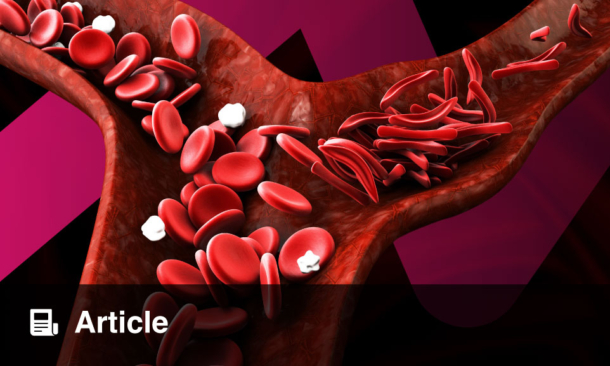
One of the greatest unmet needs is the ability to treat vaso-occlusive episodes once they have begun. At the moment, there are no approved therapies that can reverse vaso-occlusion itself; we can only manage the consequences through pain relief, hydration, and supportive care. Developing treatments that directly halt or reverse vaso-occlusion would have a major impact for patients.
Another key challenge is preventing the progressive organ damage that accumulates over a patient’s lifetime. As people with sickle cell disease are living longer and healthier lives, chronic complications affecting the lungs, kidneys, brain, and cardiovascular system are becoming increasingly important. We need therapies that not only prevent acute crises, but also preserve long-term organ function and quality of life.
In low-resource settings, however, the priorities are more fundamental. Early diagnosis through newborn screening, access to comprehensive clinical care, infection prevention, blood transfusion services, and affordable disease-modifying therapies, such as hydroxyurea, are still unavailable for many patients. While the new gene therapies are exciting, we still need to ensure that there is equitable access to effective standard treatments worldwide.
Your work spans both laboratory science and clinical relevance. How do you ensure that discoveries at the bench are translated into meaningful improvements for patients?
Our research often starts with a clinical question. We aim to understand the mechanisms driving sickle cell disease so we can identify new therapeutic targets that address the biggest unmet needs for patients. By combining experimental models with studies using patient samples, we try to ensure that our research remains clinically relevant and has the best chance of translating into better treatments.
What have been some of the most promising recent advances in therapies for sickle cell disease, and where do you think the field is heading next?
The development of gene therapies and gene editing approaches with the potential to cure sickle cell disease is a huge advancement. The challenge now is to make these therapies simpler, safer, and more accessible so that they can benefit patients worldwide.
At the same time, we still need better drugs for the majority of patients. Hydroxyurea has had a great impact, but it doesn’t work for everyone, and it doesn’t prevent all of the complications associated with the disease. Finding new therapies that work alongside hydroxyurea, or even replace it, remains a priority.
I also think we are increasingly recognising the importance of inflammation in driving many aspects of sickle cell disease. By understanding these inflammatory pathways, we can identify new drug targets that reduce vaso-occlusion and prevent progressive organ damage and other disease complications.
Given your experience in both research and education, what do you see as the most important steps to train and support the next generation of scientists working in haemoglobin disorders?
I really enjoy working with young scientists because they bring so much energy and so many new ideas. I see my role as someone who can encourage that curiosity, but also remind them that good science takes time. Experiments need to be well designed, carefully carried out, and reproducible. I think the best research comes from combining fresh thinking with a solid, rigorous approach.
Looking ahead, what changes would you most like to see in the diagnosis, treatment, and long-term care of patients with haemoglobin disorders?
I’d like to see us move from treating complications after they’ve happened to preventing them in the first place. That means earlier diagnosis, better treatments, and finding ways to stop the progressive organ damage that affects patients. I also think we need better ways of measuring whether treatments are really working. At the moment, many clinical trials focus on the frequency of vaso-occlusive crises, and while that’s important, it’s only one part of the disease. We need biomarkers and clinical endpoints that tell us whether a patient is getting better, with reduced inflammation, less organ damage, and better overall health. I think developing these biomarkers will be an important step in helping us evaluate new therapies and improve long-term care for patients with haemoglobin disorders.