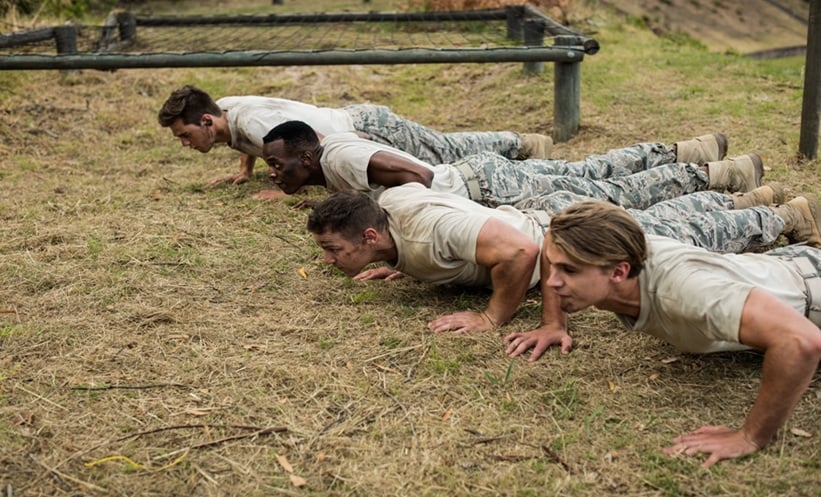
EXERCISE ASSOCIATED HYPONATRAEMIA and other physiological stress markers were common among well-trained military personnel completing a five-day high-intensity training course, despite an absence of clinical illness, according to a prospective cohort study of 23 male participants.
Researchers continuously monitored body core temperature and environmental conditions while collecting blood samples before, during, immediately after, and three weeks following the course.
The training took place in a warm humid environment and was designed to expose participants to repeated physical demands with limited recovery opportunities.
Elevated Physiological Strain Without Clinical Illness
The study found substantial physiological strain throughout the course.
Mean peak body core temperature reached 39.5±0.5°C, with 26% of participants recording temperatures between 39.5°C and 40°C and 17% exceeding 40°C.
However, no clinical symptoms of exertional heat-related illness were observed.
Researchers reported that participants spent 31% of training time with body core temperatures between 38°C and 40°C, while only 0.05% of monitored time was spent above 40°C.
These findings suggested that well-trained military personnel may tolerate marked elevations in body core temperature without developing overt illness.
Exercise Associated Hyponatraemia Was Common
A notable finding was the high prevalence of exercise associated hyponatraemia.
Almost half of participants (48%) developed asymptomatic exercise associated hyponatraemia, defined by a sodium concentration below 135 mmol/L.
Mean sodium concentrations fell from 141±2 mmol/L before training to 135±4 mmol/L at course completion, before returning to normal levels three weeks later.
Biochemical markers of muscle stress also increased substantially.
Mean creatine kinase concentrations rose from 472±796 U/L before training to 19,630±8,784 U/L at the midpoint of the course.
Although some participants experienced increases of up to 45-fold above baseline, no cases of exertional rhabdomyolysis were identified.
Triple Risk Subgroup Identified
The investigators also examined overlapping risk profiles for exertional heat related illness, exercise associated hyponatraemia, and exertional rhabdomyolysis.
Using predefined risk thresholds, 30% of participants met criteria for all three conditions during the five-day period, forming a distinct “triple risk” subgroup.
Exercise associated hyponatraemia never occurred in isolation and was always accompanied by increased risk markers for exertional rhabdomyolysis, with or without elevated heat illness risk.
The researchers suggested that these overlapping patterns may reflect shared physiological mechanisms and individual susceptibility.
Overall, the findings indicated that well-trained military personnel demonstrated considerable resilience to extreme physiological and biochemical changes.
However, the presence of overlapping risk profiles highlighted the importance of refining safety thresholds to better distinguish normal training adaptations from clinically meaningful risk.
Reference
Alhadad SB et al. Physiological and biochemical responses of well-trained military personnel in a multi-day high-intensity training course. Sci Rep. 2026;DOI:10.1038/s41598-026-63777-5
Featured image: WavebreakmediaMicro on Adobe Stock