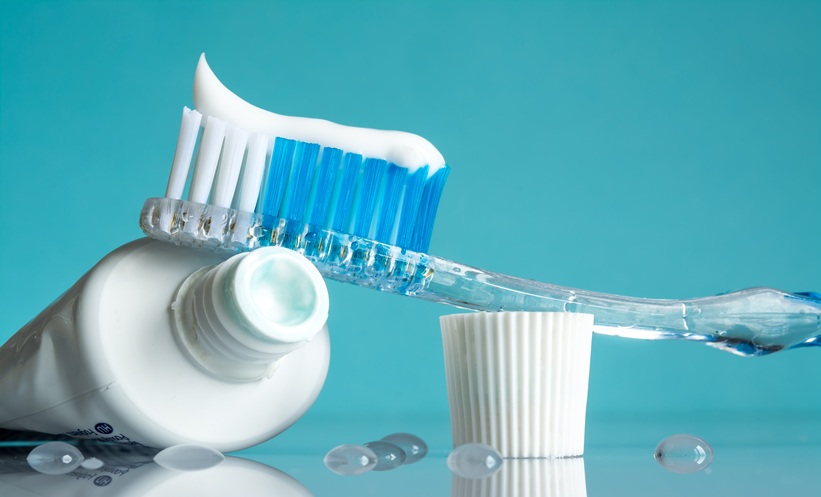
Brushing with toothpaste containing the detergent sodium dodecyl sulfate (SDS) may temporarily impair oesophageal barrier function and alter salivary properties in healthy adults, according to a small human study. The findings provide new evidence supporting the hypothesis that environmental detergent exposure could contribute to mechanisms implicated in eosinophilic oesophagitis (EoE).
EoE is characterised by epithelial barrier dysfunction, and previous experimental studies have shown that SDS can disrupt the oesophageal epithelium and promote eosinophilic inflammation in animal models. However, its effects in humans have remained unclear.
SDS Toothpaste Reduces Mucosal Impedance
Researchers recruited 12 healthy adults, 10 of whom completed the study. Participants brushed their teeth with 2 g of an SDS-containing toothpaste before undergoing continuous oesophageal mucosal impedance monitoring, a marker of epithelial barrier integrity. Saliva samples were collected to measure SDS concentrations, while oesophageal string tests and proteomic analyses were performed before and after toothbrushing.
SDS was detected immediately after brushing in all participants’ initial expectorate, with concentrations varying considerably. Notably, the detergent remained detectable in saliva in 80% of participants one hour after brushing.
Within 30 minutes of toothbrushing, oesophageal mucosal impedance had fallen significantly (p<0.01), suggesting an acute reduction in epithelial barrier function.
SDS Toothpaste Alters Salivary and Immune Responses
The investigators also observed changes in saliva and oesophageal protein expression following toothbrushing. Salivary viscosity increased, alongside elevated levels of proteins involved in mucosal defence.
Proteomic analysis identified downregulation of the tight junction pathway, which plays a key role in maintaining epithelial barrier integrity. At the same time, pathways involved in salivary secretion and the complement and coagulation cascades were upregulated in the proximal oesophagus, indicating activation of local mucosal immune responses.
SDS Toothpaste Findings Warrant Further Investigation
The authors conclude that SDS-containing toothpaste can remain in saliva for prolonged periods at concentrations previously shown to disrupt oesophageal epithelial cells in laboratory studies. In healthy adults, this exposure was associated with transient reductions in oesophageal mucosal impedance, altered salivary characteristics, and activation of mucosal immune pathways.
Although the study was small and conducted in healthy volunteers rather than patients with EoE, the findings provide mechanistic evidence that common household detergents may influence oesophageal barrier function. Larger clinical studies are now needed to determine whether repeated exposure to SDS contributes to the development or progression of eosinophilic oesophagitis in susceptible individuals.
Reference
Wright BL et al. Detergent-Containing Toothpaste Decreases Esophageal Mucosal Impedance and Alters Salivary Properties in Humans. Allergy. 2026; 10.1111/all.70437.
Featured image: HappyRichStudio on Adobe Stock
- Author: