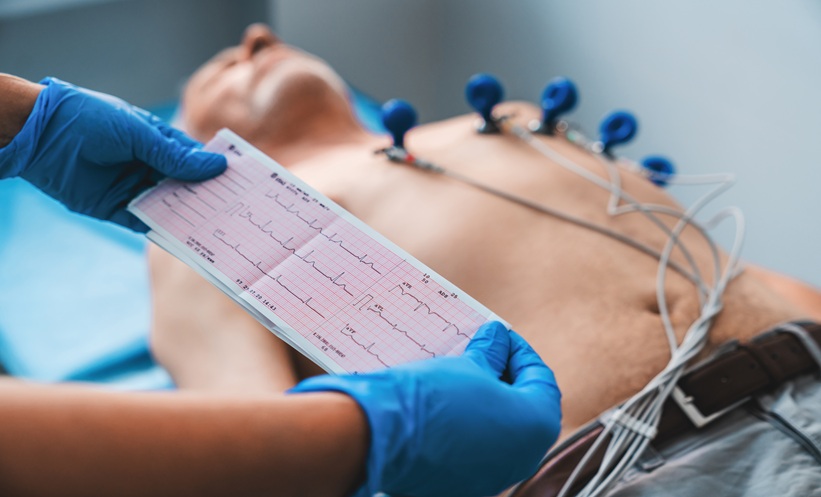
ECG fatigue detection using machine learning accurately identified fatigue status in older adults, with a 97.96% test accuracy in a dataset of 100 participants.
ECG Fatigue Detection Using Embedded Technology
Researchers developed a portable ECG-based fatigue monitoring system designed for older adults.
The aim was to provide a low-cost and practical approach for detecting fatigue-related changes that could be deployed in everyday settings.
The study analysed electrocardiogram recordings collected from 100 elderly participants between 2021 and 2024.
Following signal processing and segmentation, the dataset contained 6,304 labelled electrocardiogram segments for analysis.
Machine Learning Models Compared
The researchers evaluated three deep learning approaches for fatigue classification: recurrent neural network, long, short-term memory network, and gated recurrent unit.
Data were divided using subject-wise splitting, with 80% allocated to training, 10% to validation, and 10% to testing.
Among the tested models, the gated recurrent unit demonstrated the strongest performance (97.96% test accuracy).
The long, short-term memory network also performed strongly, achieving a test accuracy of 97.32%, whereas the recurrent neural network reached 82.76%.
According to the researchers, the superior performance of the gated recurrent unit reflected its ability to capture temporal dependencies in electrocardiogram data while maintaining computational efficiency.
Potential Applications in Elderly Care
The findings support the feasibility of ECG-based fatigue detection for older adults using embedded and cost-effective technology.
Researchers identified heart rate variability measures, R-R intervals, and R wave amplitude as important contributors to fatigue prediction.
The authors noted that the proposed system could help bridge the gap between laboratory research and practical monitoring tools for ageing populations.
Potential applications include home based-monitoring and remote healthcare environments where continuous assessment of fatigue may assist in maintaining health and wellbeing.
While the results demonstrated strong performance and generalisability, the researchers indicated that further clinical validation is planned to assess the technology in broader real-world settings.
Reference
Baccouch C et al. Machine learning based ECG analysis with data augmentation for fatigue status detection in elderly individuals. Sci Rep. 2026;DOI:10.1038/s41598-026-62370-0
Featured image: InsideCreativeHouse on Adobe Stock