POOR agreement between bioreactance and echocardiography during passive leg raising has suggested that the two methods should not be used interchangeably when assessing fluid responsiveness in patients with shock.
Researchers conducted a prospective observational study in a medical intensive care unit involving 30 adults with shock requiring vasopressor support.
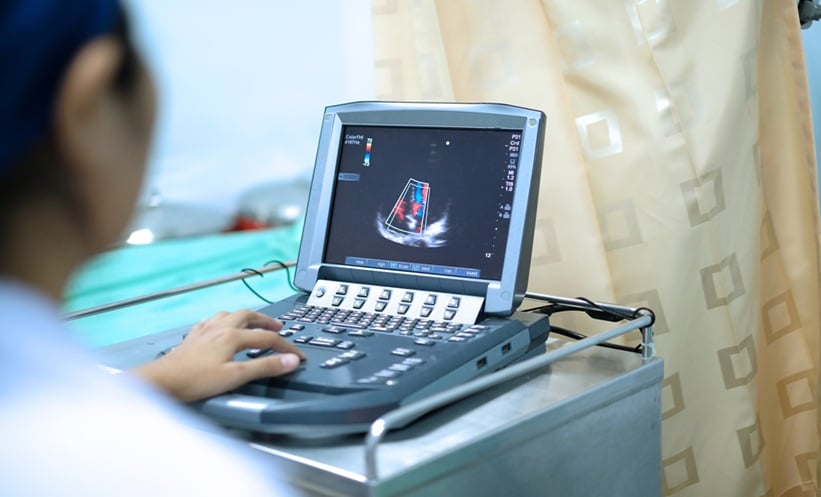
Stroke volume was measured before and after passive leg raising using both transthoracic echocardiography and a bioreactance-based monitoring system.
Fluid responsiveness was defined as a stroke volume increase of at least 10% following the manoeuvre.
Echocardiography identified 12 patients as responders, representing 40.0% of the cohort, while bioreactance classified 16 patients as responders, representing 53.3%.
Weak Correlation Between Monitoring Methods
The study found little alignment between measurements generated by the two approaches.
Percentage changes in stroke volume measured by echocardiography and bioreactance demonstrated a weak and non-significant correlation.
Agreement analysis also highlighted substantial differences between methods. Bland Altman analysis showed a bias of -6.8%, with wide limits of agreement ranging from -66.5% to +52.8%. The findings were considered clinically unacceptable by the reserachers.
Responder classification agreement was similarly limited. Overall agreement was 53.3%, while Cohen’s kappa coefficient indicated only slight agreement beyond chance.
Bioreactance failed to identify five patients who were classified as responders by echocardiography.
Clinical Implications for Fluid Responsiveness Assessment
Diagnostic performance analyses further reinforced the lack of concordance.
Receiver-operating-characteristic analysis demonstrated poor discrimination for identifying echocardiography-defined responders. The optimal bioreactance threshold of 26.12% produced a sensitivity of 41.7% and specificity of 83.3%.
The investigators concluded that bioreactance-derived stroke volume changes did not reliably track echocardiographic measurements during passive leg raising in critically ill patients with shock.
Across correlation, agreement, classification, and diagnostic performance analyses, results consistently indicated limited concordance between methods.
These findings suggest clinicians should exercise caution when relying solely on bioreactance to guide fluid administration in patients with shock.
The researchers stated that echocardiographic assessment should remain the preferred approach when expertise and image quality are available, while larger studies are needed to confirm the findings.
Reference
Anis A et al. Poor agreement between bioreactance and echocardiography during passive leg raising in patients with shock. Sci Rep. 2026;DOI:10.1038/s41598-026-64990-y
Featured image: Pijitra on Adobe Stock