Abstract
Chronic spontaneous urticaria is a common, mast cell-driven condition, and although the treatment ladder now extends to omalizumab, dupilumab, and remibrutinib, it is organised around treatment response rather than prognosis. This narrative review is built around the three questions a clinician faces at the first specialist visit: how active the disease is now, who will follow a persistent or severe course, and who will respond to which therapy. The validated instruments in routine use answer only the first question, since they measure current activity, control, and quality of life, and were not designed to forecast the future. Prognostic information about persistence and severity is scattered across clinical features such as disease duration, angioedema, and coexisting inducible urticaria, and across the autoimmune Type IIb endotype, but has not been assembled into a validated tool. Predictive biomarkers, including the baseline total IgE, the ratio of IgG anti-thyroid peroxidase to total IgE, basophil high-affinity IgE receptor expression, and functional autoreactivity, are associated with the response to omalizumab, yet most remain associative and may not transfer to newer agents. This review contends that answering the three questions will require composite, treatment-specific models that are validated prospectively, and it sets out the evidence, obstacles, and practical research agenda. No validated prognostic tool is currently available for routine use, although the components required to build one are becoming clear.
Key Points
1. The care of chronic spontaneous urticaria can be framed around three questions asked at the first visit: how active the disease is now, who will follow a persistent or severe course, and who will respond to a given therapy. Current practice answers only the first with confidence.2. Validated instruments measure current disease, while prognostic and predictive information is scattered across clinical features and biomarkers that are largely associative, are rarely validated prospectively, and are mostly specific to the response to omalizumab.
3.Answering the second and third questions will require composite, treatment-specific models that are prospectively and externally validated. No such tool is yet available, but the components required to build one are increasingly defined.
INTRODUCTION
Chronic spontaneous urticaria (CSU) is defined by the recurrence of wheals, angioedema, or both for more than 6 weeks without a consistent external trigger. It is common, driven by the activation of skin mast cells, and imposes a quality-of-life burden comparable with ischaemic heart disease. The updated international guideline recommends a stepwise approach that begins with a second-generation H1 antihistamine, escalates to a fourfold dose, and then adds omalizumab, with dupilumab and remibrutinib now positioned as further options before ciclosporin.1,2 These agents act through different mechanisms, since dupilumab is effective irrespective of a low baseline total IgE level and remibrutinib is effective independently of previous omalizumab use.3,4
For all its strengths, this algorithm is reactive. It responds to failure rather than anticipating it, and the patient who is destined to struggle is usually recognised only after months of unsuccessful escalation. A more useful way to organise the evidence is around the three questions a clinician actually faces at the first specialist visit: How active is the disease now? Who will follow a persistent or severe course? Who will respond, and to which therapy? This review examines how well the available tools and biomarkers answer each question in turn, and what would be needed to answer the second and third as reliably as the first. It is based on a structured search of PubMed and Embase and recent international guidelines using terms related to CSU, biomarkers, endotypes, prognosis, and the biologic and small molecule therapies, with priority given to guidelines, systematic reviews, prospective cohorts, and major trials.
Three terms are used with specific meanings. Severe disease refers to high current activity, for example, a Urticaria Activity Score summed over 7 days (UAS7) of 28–42, often with frequent angioedema. Persistent disease refers to disease that continues without remission for a prolonged period, taken here as active disease beyond 12 months. Refractory, or difficult-to-control, disease refers to inadequate control despite guideline-directed therapy, including antihistamines at up to fourfold dose and omalizumab, for example, a persistently raised UAS7 or a Urticaria Control Test (UCT) below 12. Severity describes the present state, whereas a persistent or refractory course is a future outcome that a prognostic tool would seek to predict.
THE FIRST QUESTION: HOW ACTIVE IS THE DISEASE NOW?
The instruments recommended for routine use answer this question well. The UAS7 records wheal number and itch intensity, ranges from 0–42, and is valid, reliable, and responsive to change.5 The UCT captures disease control over recent weeks, with a score of 12 or more indicating well-controlled disease,6 and the Chronic Urticaria Quality of Life Questionnaire (CU-Q2oL) measures the impact of urticaria on daily life.7 For angioedema, the Angioedema Activity Score (AAS), the Angioedema Quality of Life Questionnaire (AE-QoL), and the Angioedema Control Test (AECT) provide parallel measures of activity, impact, and control.8-10
These tools were deliberately built to be sensitive to change, so that a clinician can tell whether a patient is better or worse than before. That very property limits their prognostic value. They quantify the present; they contain no biological information, and they cannot separate a patient with transient severe disease from one whose disease will prove persistent. A high UAS7 at baseline is associated with a lower chance of early remission, so activity carries some prognostic weight, but none of these instruments was constructed to forecast the course of disease. Table 1 sets out how the three questions map onto the tools and markers that address them.
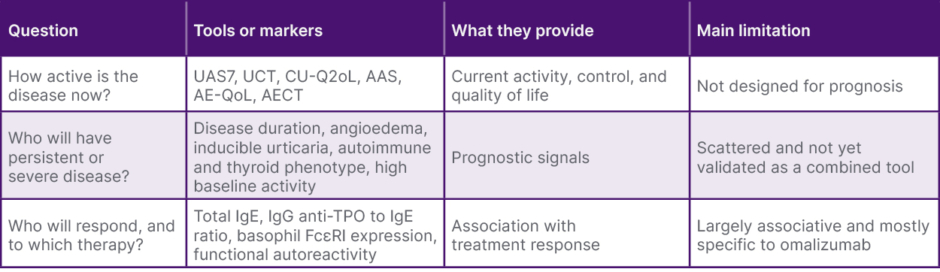
Table 1: The three clinical questions in CSU and the tools or markers that address them.
AAS: Angioedema Activity Score; AECT: Angioedema Control Test; AE-QoL: Angioedema Quality of Life Questionnaire; anti-TPO: anti-thyroid peroxidase antibody; CSU: chronic spontaneous urticaria; CU-Q2oL: Chronic Urticaria Quality of Life Questionnaire; FcεRI: high-affinity IgE receptor; UAS7: Urticaria Activity Score summed over 7 days; UCT: Urticaria Control Test.
THE SECOND QUESTION: WHO WILL HAVE PERSISTENT OR SEVERE DISEASE?
Prognosis in CSU is heterogeneous. Roughly one-third to one-half of patients remit within a year, yet a meaningful proportion continue with active disease at 5 years. A longer course is associated with a younger age at onset, a relapsing and remitting pattern, the presence of angioedema, high disease activity, coexisting chronic inducible urticaria, and functional serum autoreactivity.11 Cohorts of antihistamine refractory patients show a similar profile, with angioedema, high baseline activity, and autoimmune comorbidity among the features associated with poor control.12 Autoimmune thyroid disease is the most consistent comorbid signal, since thyroid autoantibody positivity is associated with a longer duration, greater severity, and a lower response rate at Week 24 of treatment.13
A biological thread runs through these observations. Approximately 40% of CSU is driven by autoimmune mechanisms, and the Type IIb autoimmune endotype, supported in research settings by a positive autologous serum skin test, a positive basophil activation test, and autoantibodies against IgE or its receptor, is associated with more active and more stubborn disease.14,15 In everyday practice, the endotype can be approximated by a low total IgE, an elevated IgG anti-thyroid peroxidase, basopenia, and eosinopenia.16 These prognostic signals are individually modest and, importantly, they remain scattered across separate studies and separate variables. None has been combined into a validated instrument that a clinician could apply at the first visit to estimate the risk of a persistent or severe course.
THE THIRD QUESTION: WHO WILL RESPOND, AND TO WHICH THERAPY?
Most predictive work has centred on the response to omalizumab, and the baseline total IgE has emerged as the most studied marker. A low or very low total IgE is associated with coexisting autoimmunity and with a slower and only partial response, whereas higher baseline levels favour a complete response.17 The dynamic behaviour of IgE is also informative, since the clinical response is linked to the change in IgE after starting treatment, and an early rise in total IgE predicts a good response.18,19 A high ratio of IgG anti-thyroid peroxidase to total IgE, above a reported cutoff, has been associated with markedly higher odds of a poor response.18 Cellular markers add further resolution. Baseline basophil high-affinity IgE receptor expression predicts response with high sensitivity, and its fall after 4 weeks tracks clinical improvement,20 while functional autoreactivity, measured by a basophil histamine release assay, predicts not whether but how quickly a patient responds, with autoreactive patients responding more slowly.21 Raised inflammatory markers, basopenia, and eosinopenia have also been linked with more active disease and a slower response in real-world biomarker analyses,22 as summarised in recent endotype and biomarker reviews.23
Two cautions temper this progress. First, most of these findings are associations rather than validated predictions, and few have been tested prospectively as predictors of treatment failure. Second, and increasingly important, the markers are largely specific to omalizumab. As dupilumab and remibrutinib enter routine use, a biomarker that predicts the response to anti-IgE therapy cannot be assumed to predict the response to IL4 and IL13 blockade or to Bruton tyrosine kinase inhibition.3,4 Prediction in CSU will therefore need to become treatment-specific, and a single test that ignores which therapy is being considered is unlikely to serve a mechanistically diverse set of options. Table 2 summarises the main predictive markers for omalizumab and their reported behaviour.
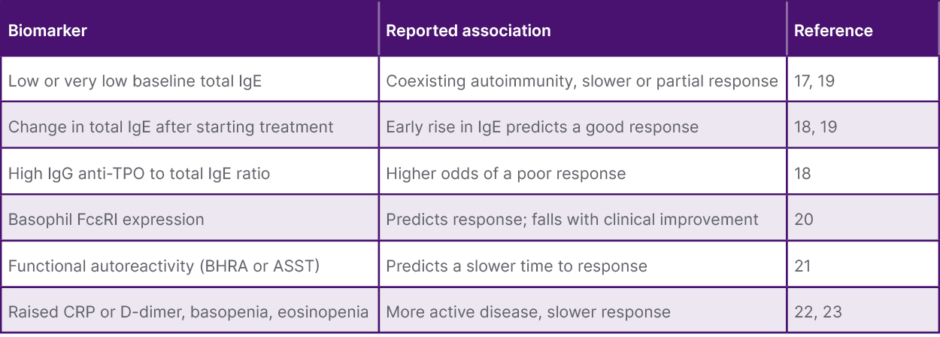
Table 2: Selected biomarkers associated with the response to omalizumab in CSU.
anti-TPO: anti-thyroid peroxidase antibody; ASST: autologous serum skin test; BHRA: basophil histamine release assay; CRP: C-reactive protein; CSU: chronic spontneous urticaria; FcεRI: high-affinity IgE receptor.
The predictive evidence for the newer agents is at an even earlier stage, and this section is therefore framed mainly around omalizumab. Dupilumab blocks IL4 and IL13 signalling and is effective irrespective of the baseline total IgE, so a Type 2 inflammatory or atopic profile may prove relevant, although no validated predictor of response has yet been established.3 Remibrutinib inhibits Bruton tyrosine kinase and acts downstream of the high-affinity IgE receptor, and it is effective independently of the baseline IgE and of previous omalizumab use, which suggests activity across endotypes.4 Direct and indirect comparisons of the three agents are beginning to appear, but they do not yet identify markers that select one therapy over another, and treatment-specific prediction for dupilumab and remibrutinib remains a priority for
future work.24
FROM SINGLE MARKERS TO COMPOSITE MODELS
The pattern across all three questions is the same. Useful information exists, but it is fragmented, and no single marker is strong enough to guide a decision on its own. The logical response is to combine signals. The updated guideline has, for the first time, placed the prediction of disease course on its formal research agenda, which signals that the field now recognises the need.1 Early work supports the idea in principle, since machine learning applied to baseline variables has classified patients as early, late, or non-responders,25 and real-world analyses have tested panels of serum markers against the response to omalizumab.23 Composite frameworks that integrate a measure of activity, the biomarkers of the Type IIb endotype, and the relevant clinical features are a natural next step, and several are likely to emerge. One such framework, the CLARITY score, is being developed by the authors as an investigational composite of clinical and laboratory variables that scores markers available at the first specialist visit to estimate the risk of a difficult course. It is named in Figure 1 to illustrate the concept, is not yet validated, and is described in full elsewhere. Any such model must define its target outcome, since disease persistence, disease severity, and poor treatment response are distinct, and it must state which therapy its predictions concern. Investigational frameworks of this kind should be treated as hypothesis-generating and should not influence individual care until they have been validated externally.
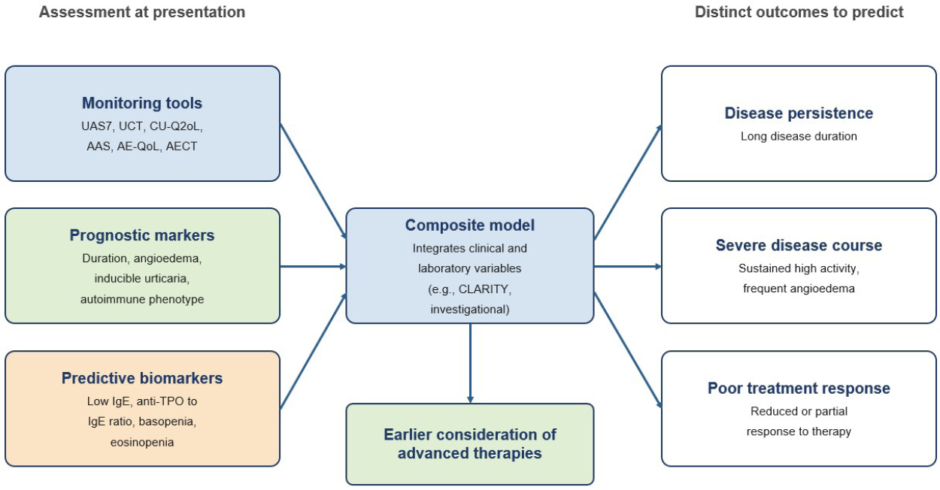
Figure 1: Framework for risk stratification in CSU.
Conceptual framework for risk stratification in CSU. Markers assessed at presentation address three distinct outcomes, namely disease persistence, a severe or high-activity disease course, and a poor or reduced treatment response, and may be integrated into a composite model, such as the investigational CLARITY score, an example framework that combines clinical and laboratory variables to estimate the risk of a difficult course, to support the earlier consideration of advanced therapies. The approach requires prospective validation and has not been shown to modify the natural history.
AAS: Angioedema Activity Score; AECT: Angioedema Control Test; AE-QoL: Angioedema Quality of Life Questionnaire; anti-TPO: anti-thyroid peroxidase antibody; CSU: chronic spontaneous urticaria; CU-Q2oL: Chronic Urticaria Quality of Life Questionnaire; UAS7: Urticaria Activity Score summed over 7 days; UCT: Urticaria Control Test.
OBSTACLES TO TRANSLATION
Several obstacles stand between the current evidence and a usable tool. Most biomarker studies are observational and involve relatively small cohorts, which limits the certainty of the reported associations across different healthcare settings. Definitions of refractory or difficult-to-control disease are heterogeneous, and treatment response endpoints vary between studies, which limits comparison. Much of the evidence derives from tertiary referral populations and is subject to referral bias, with limited applicability to community-based populations. The growing diversity of therapy adds a further layer, since a model validated for one drug may not hold for another. These constraints mean that current markers and frameworks offer biological and clinical insight but are not yet ready to guide routine care.
A PRACTICAL RESEARCH AGENDA
Progress will depend on several parallel efforts. The most immediate is the prospective validation of candidate biomarkers against clearly defined outcomes, followed by multi-centre international validation across different populations and healthcare settings. Beyond this, the integration of clinical and laboratory variables into composite models, the incorporation of genomic, transcriptomic, and proteomic data, and the development of treatment-specific predictions for omalizumab, dupilumab, and remibrutinib would move the field from the description of associations towards tools that can be trusted. Finally, the health-economic evaluation of risk-stratified pathways will determine whether earlier, targeted treatment is not only effective but also affordable. The key unanswered questions that remain are:
- Which biomarkers are sufficiently reliable for routine practice?
- Can composite models outperform single biomarkers?
- Should prediction models be therapy-specific?
- Can early risk stratification improve patient outcomes?
- Is biomarker-guided treatment cost-effective?
CONCLUSION
Framing CSU around three questions exposes both the strength and the limitation of current practice. The first question, how active the disease is now, is answered well by validated instruments. The second and third (who will follow a persistent or severe course and who will respond to which therapy) are not, since the relevant prognostic and predictive information is scattered, largely associative, and mostly specific to omalizumab. Composite, treatment-specific models that are prospectively and externally validated offer a rational way to close this gap, and prospective work will determine whether they can bring the confidence of the first answer to the other two.