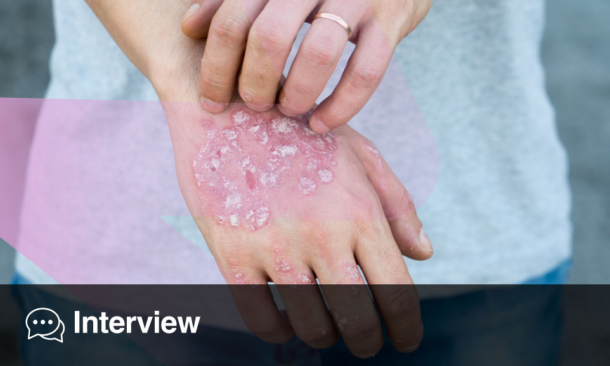
CAREGIVER reports may identify pediatric atopic dermatitis remotely in children under 2 years with healthcare access.
However, accuracy varied by method. A proxy report that a clinician had diagnosed atopic dermatitis performed better overall than the Childhood Eczema Questionnaire, particularly for identifying children who truly had the condition.
Remote Pediatric Atopic Dermatitis Methods
The post hoc analysis used data from the Community-based Assessment of Skin Care, Allergies, and Eczema (CASCADE) prevention trial. It included 933 children with sufficient data to compare remote caregiver responses against a clinician’s chart diagnosis of atopic dermatitis.
Primary care clinicians and pediatricians who provided the reference diagnoses received additional training in recognizing atopic dermatitis. By 24 months, 244 children, or 26.2% of the cohort, had a chart diagnosis.
Researchers assessed sensitivity, specificity, positive predictive value, and negative predictive value for two remote methods at 12 and 24 months: the Proxy Report of a Clinician Atopic Dermatitis Diagnosis and the Childhood Eczema Questionnaire.
Caregiver Report Outperforms Eczema Questionnaire
At 12 months, the proxy report achieved 65.8% sensitivity and 91.3% specificity. Its positive predictive value was 72.5%, while its negative predictive value was 88.5%.
Most measures improved at 24 months. Sensitivity reached 71.6% and specificity rose to 93.2%. The positive predictive value increased to 88.3%, although the negative predictive value declined to 82.2%.
The Childhood Eczema Questionnaire was similarly specific but less sensitive. At 12 months, sensitivity was 46.3% and specificity was 91.5%, with positive and negative predictive values of 64.5% and 83.5%, respectively.
At 24 months, questionnaire sensitivity was 50.9% and specificity was 93.2%. Positive predictive value reached 84.1%, while negative predictive value was 72.8%. Failure to observe or report itch or rash was the most common reason caregivers missed cases on the questionnaire.
Implications for Remote Eczema Research
The findings support proxy reports of clinician diagnoses as an adequate method for remotely identifying childhood atopic dermatitis cases in research involving children younger than 2 who have access to healthcare.
Yet neither remote method detected every case. The lower sensitivity of the Childhood Eczema Questionnaire indicates that relying on caregiver observed symptoms alone may exclude children whose itch or rash is not noticed or reported. The researchers therefore limited their conclusion to remote case identification for research, rather than presenting either method as a replacement for clinical assessment.
Reference
Fang MM et al. Remote identification of new onset pediatric atopic dermatitis: a comparison of diagnostic methods from a post-hoc analysis of the CASCADE prevention trial. Br J Dermatol. 2026;doi:10.1093/bjd/ljag347.
Featured Image: PintoArt on Adobe Stock.