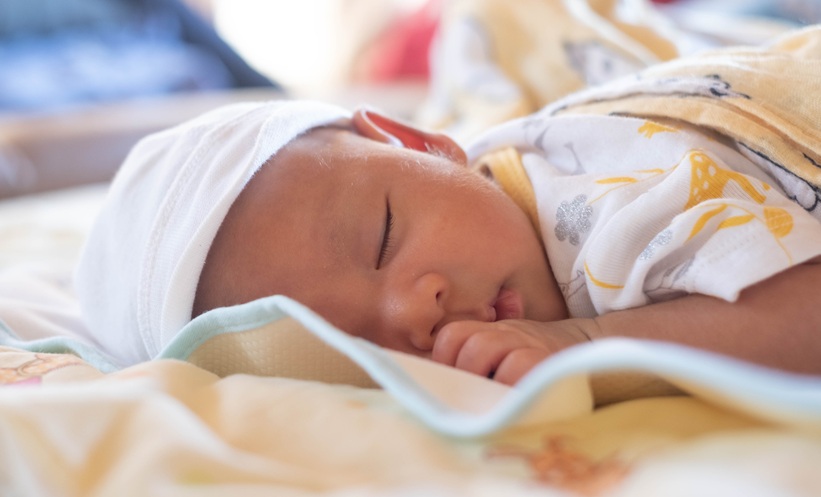
Prone sleeping may create conditions that increase bacterial levels in the upper airways, potentially offering new insight into why this sleeping position is associated with sudden infant death syndrome (SIDS).
The study found significantly higher bacterial titres in the anterior nares when participants were positioned prone compared with supine. The difference was particularly pronounced during suspected upper respiratory tract infection (URTI), supporting further investigation into a possible interaction between sleeping position, infection, and bacterial exposure.
Exploring the Bacterial Hypothesis of SIDS
Prone sleeping is an established risk factor associated with SIDS and sudden unexplained death in childhood (SUDC), but the biological mechanisms underlying this relationship remain incompletely understood.
Researchers investigated whether body position could influence bacterial titres within the nose and whether respiratory illness could amplify this effect.
The prospective cross-over study recruited 100 adults as substitutes for infants. Participants were asked to collect nasal swabs while healthy and while experiencing an URTI, with samples obtained following prone and supine positioning. Ultimately, 28 participants developed an URTI during the study and formed the final cohort, although five did not provide asymptomatic samples.
Samples were cultured under both aerobic and anaerobic conditions to quantify total bacterial levels, while molecular testing was also performed for respiratory viruses.
Prone Position Increases Bacterial Titres
Even when participants were asymptomatic, prone positioning was associated with significantly higher bacterial titres compared with the supine position under both aerobic and anaerobic culture conditions (both p=0.0101).
The association became more pronounced during respiratory illness. Among symptomatic participants, bacterial titres were significantly higher in the prone position under anaerobic (p=0.0001) and aerobic (p=0.0003) conditions.
Importantly, the relationship remained significant after researchers adjusted for potential confounding factors, including sex, position sequence, breathing mechanism, and smoking (p<0.0001).
Findings Add to SIDS Bacterial Hypothesis
The researchers concluded that prone positioning is associated with increased bacterial titres in the anterior nares and that this effect could be amplified during a suspected viral respiratory illness.
The findings provide additional support for the bacterial hypothesis of SIDS, which proposes that bacterial factors could contribute to the biological processes underlying some sudden unexplained infant deaths.
However, the study does not demonstrate that increased nasal bacterial titres cause SIDS. Crucially, the experiment involved a small cohort of adults rather than infants, meaning the findings cannot be directly extrapolated to infant physiology. Further studies will therefore be needed to establish whether the same positional changes occur in infants and whether they have clinical relevance to SIDS or SUDC.
Reference
Melanie LA et al. Advancing the Bacterial Hypothesis of Sudden Infant Death Syndrome (SIDS) and Sudden Unexplained Death in Childhood (SUDC): Evidence that Prone Sleeping Position Elevates Bacterial Titres in the Anterior Nares. Journal of Applied Microbiology. 2026;DOI: 10.1093/jambio/lxag203.