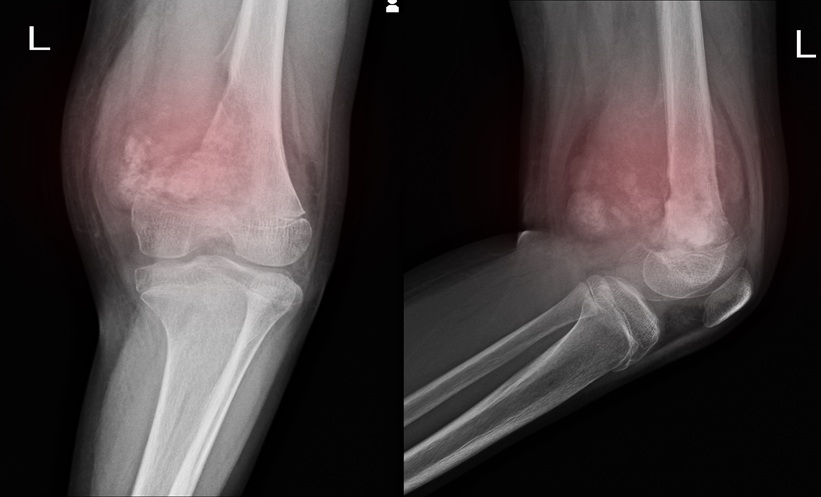
RADIOMICS could help radiologists distinguish benign cartilage tumours from those that may require further investigation, according to a review examining the use of artificial intelligence (AI) in bone tumour imaging.
Researchers concluded that the technology still requires further testing before it can be used reliably in clinical practice.
The review investigated whether AI could help differentiate enchondromas, which are benign cartilage tumours, from atypical cartilaginous tumours (ACTs) and chondrosarcomas, which can require further investigation or treatment.
AI Analyses Imaging Features
Radiomics involves analysing features of medical images, including patterns, textures and shapes, that may not be easily distinguishable through visual assessment alone.
Researchers explored how these features could be used by machine learning and deep learning models to classify cartilage tumours using imaging techniques such as MRI, CT and SPECT/CT.
The review included 14 reports covering 13 retrospective studies, involving 1,447 participants.
Researchers assessed how accurately the models distinguished enchondromas from ACTs or chondrosarcomas, as well as the quality of the research and whether the findings could be applied in clinical practice.
Promising Results, but Evidence Remains Limited
Across the studies reporting usable diagnostic results, sensitivity ranged from 80.0% to 93.5%, while specificity ranged from 72.7% to 100%.
These findings suggest that radiomics could help identify differences between benign and potentially malignant cartilage tumours.
However, the studies varied considerably in their imaging techniques, AI methods and approaches to testing their models, making direct comparisons difficult. All studies were retrospective, and only one used testing at an independent geographical location to assess how well its model performed beyond the original study setting.
Further Research Needed Before Clinical Use
The researchers highlighted substantial methodological weaknesses across the evidence, meaning that promising diagnostic results do not necessarily translate into reliable clinical performance.
Further prospective studies involving multiple centres may be needed to determine whether radiomics can improve radiologists’ assessments and support decisions about monitoring, referral or treatment.
Reference
Clausen NA et al. Radiomics-Based Differentiation of Enchondroma from Atypical Cartilaginous Tumour and Chondrosarcoma: A Systematic Review and Appraisal. J Digit Imaging Inform Med.2026; DOI: 10.1007/s10278-026-02539-1.