Key Summary:
- High scalp sebum was associated with lower hydration and weaker barrier function.
- Oxidative stress biomarker HODE correlated with sebum, dandruff, and scalp itch.
- One shampoo wash significantly reduced scalp sebum and HODE levels.
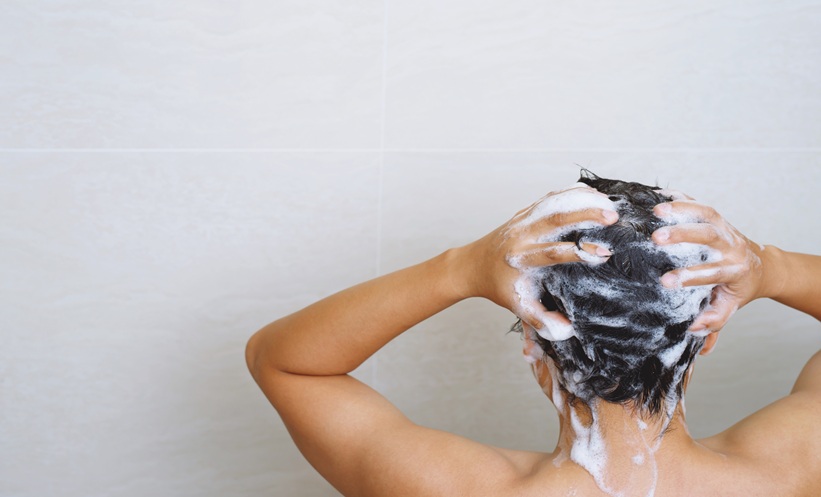
HIGH scalp sebum was associated with reduced hydration, weaker barrier function, and greater oxidative stress biomarkers.
A study of adults with self-reported oily scalp and dandruff found that scalp skin had substantially different physiological characteristics from nearby skin. Researchers assessed 32 healthy Chinese participants aged 20 to 45 years whose scalp sebum levels were 75 to 160 µg/cm² after 24 hours of accumulation.
Measurements across the scalp showed that surface sebum was highest in the mid-front region and decreased toward the sides and rear. Compared with the frontal hairline and nape, the scalp had significantly higher surface sebum. The clipped scalp area also showed lower stratum corneum hydration and higher transepidermal water loss, indicating weaker skin barrier function.
Pore sebum was significantly negatively correlated with scalp hydration at baseline, although surface sebum was not significantly associated with hydration or transepidermal water loss. The findings suggest that an oily scalp should not necessarily be assumed to be well hydrated.
Researchers also measured hydroxyoctadecadienoic acid (HODE), an oxidative stress biomarker formed from linoleic acid. Total HODE levels were positively correlated with both surface and pore sebum. Higher HODE levels were also associated with participants reporting dandruff and scalp itch. In the cohort, 69% reported dandruff and 56% reported itch within 24 hours after washing with the preconditioning shampoo.
The team then evaluated the effect of a single wash with a prototype shampoo containing 0.5% piroctone olamine. Thirty minutes after hair drying, both surface and pore scalp sebum were significantly reduced in clipped and unclipped areas. HODE levels in the stratum corneum also declined.
For clinicians, the findings add physiological context to common scalp complaints by linking high scalp sebum with lower hydration, impaired barrier measures, oxidative stress, dandruff, and itch. They also suggest that cleansing can rapidly alter measurable sebum and oxidative biomarkers.
However, the study was small, included only Chinese adults with oily scalp and dandruff concerns, and did not grade dandruff severity. Microbiome and lipidome profiles were not assessed. Because the shampoo evaluation used a before and after design without a parallel control group, the study could not separate the effects of the formulation from mechanical cleansing.
Further controlled studies are needed to clarify how excess sebum production, scalp microbiome activity, lipid oxidation, and skin barrier function interact in scalp disorders.
Reference
Chen K et al. Physiological characteristics of scalp skin with high sebum production and the impacts of shampoo cleansing. Skin Res Technol. 2026;32(8):e70376.
Featured Image: methaphum on Adobe Stock.
Each article is made available under the terms of the Creative Commons Attribution-Non Commercial 4.0 License.