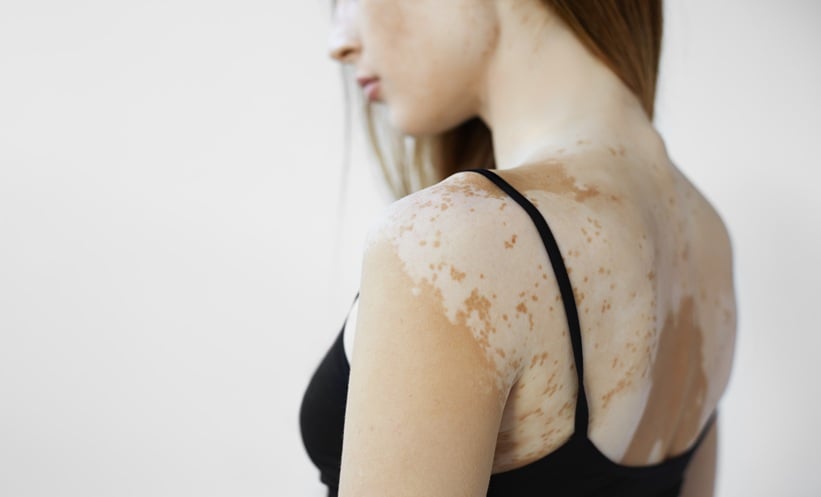
ADDING oral gliadin-protected superoxide dismutase (GP-SOD) to targeted ultraviolet B (UVB) phototherapy significantly improved repigmentation and quality of life in patients with localized vitiligo, according to findings from a prospective, randomised study.
Oxidative stress is widely recognised as a key contributor to vitiligo pathophysiology, but the clinical value of antioxidant therapies has remained uncertain. To investigate whether antioxidant supplementation could enhance treatment outcomes, researchers conducted a 6-month, prospective, comparative, single-blinded study involving 40 patients with localised vitiligo.
All participants received targeted phototherapy using an excimer lamp. Patients were randomly assigned either to receive phototherapy alone or phototherapy combined with oral GP-SOD, an antioxidant enzyme formulation protected by gliadin to improve oral delivery. The primary endpoint was change in disease severity measured using the Vitiligo Area Scoring Index (VASI), while quality of life was assessed using the Vitiligo Quality of Life (VitiQoL) questionnaire.
Combination Therapy Improves Repigmentation at 6 Months
After six months, both treatment groups achieved significant improvements in VASI scores compared with baseline (both p<0.0001). However, patients receiving the combination of GP-SOD and targeted UVB experienced significantly greater repigmentation than those receiving phototherapy alone. Mean VASI improvement was −1.65 ± 0.08 in the combination group versus −1.14 ± 0.08 with phototherapy alone, corresponding to a between-group difference of 0.51 (95% CI 0.28–0.74; p<0.0001).
Greater Vitiligo Quality-of-Life Gains With GP-SOD
Quality-of-life outcomes also favoured the combination approach. Patients treated with GP-SOD alongside phototherapy reported significantly greater improvements in VitiQoL scores than those receiving UVB alone, with a between-group difference of 5.59 points (95% CI 4.01–7.17; p<0.0001).
The findings suggest that targeting oxidative stress alongside phototherapy may provide additional clinical benefit for patients with localised vitiligo. While targeted UVB phototherapy remains an established treatment option, adjunctive oral GP-SOD appeared to enhance repigmentation and improve patient-reported quality of life over the six-month study period.
The authors conclude that combining GP-SOD with targeted UVB phototherapy significantly increases the effectiveness of phototherapy for repigmenting vitiligo lesions, supporting further investigation of antioxidant strategies as adjunctive treatments in larger, longer-term studies.
Reference
Leone G et al. Combination of oral gliadin-protected superoxide dismutase with targeted phototherapy in vitiligo: a prospective, comparative, randomized, single-blinded study. Photodermatol Photoimmunol Photomed. 2026;DOI: 10.1111/phpp.70105
Featured image: shurkin_son on Adobe Stock
- Author: