A NEW study has introduced a novel scoring framework designed to improve the assessment of photosensitive skin diseases by weighting anatomical regions according to ultraviolet (UV) exposure rather than body surface area alone.
Surface Area-Based Scoring May Underestimate Photosensitive Disease
Current dermatological severity indices, including those commonly used in inflammatory skin diseases, typically calculate overall disease severity using body surface area-based regional weightings. However, the authors note that photosensitive conditions often predominantly affect small but highly sun-exposed areas, meaning clinically important disease activity may be underestimated when conventional scoring systems are used.
To address this limitation, researchers developed photoexposure region-weighting factors (PRWFs), a standardised approach that prioritises UV exposure over surface area when calculating disease severity.
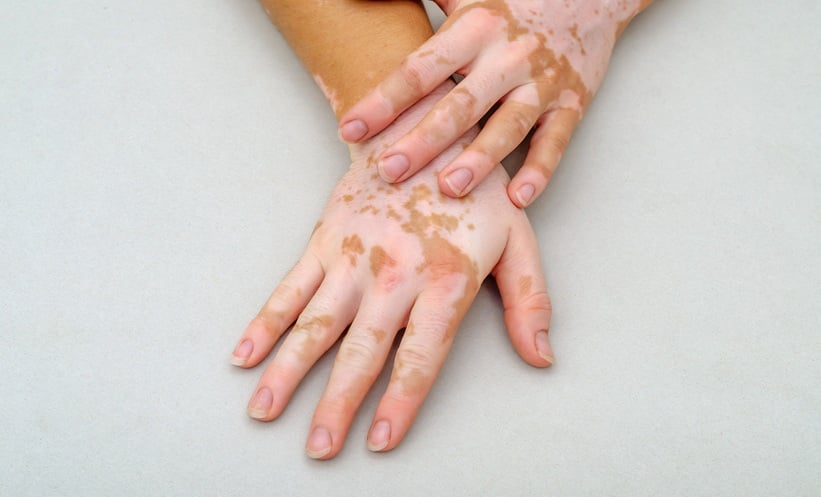
Using expert consensus, the team identified five anatomical regions that are characteristically affected in photosensitive disease: the face, the V-area of the neck and upper chest, the dorsal neck, the dorsal forearms, and the dorsal hands. These regions represent just 10.7% of total body surface area but account for a substantial proportion of cumulative UV exposure.
The researchers combined computational modelling of UV exposure across walking, standing, and sitting postures with regional surface area measurements to generate clinically applicable weighting factors. The final rounded PRWFs assigned weighting values of 0.3 for both the face and dorsal forearms, 0.2 for the dorsal hands, and 0.1 for both the V-area of the neck and upper chest and the dorsal neck.
To assess the reproducibility of the approach, the investigators evaluated an earlier PRWF-based modification of the Eczema Area and Severity Index (EASI) using six image-based atopic dermatitis cases scored by eight assessors across four institutions. The modified tool demonstrated good inter-rater reliability during the first assessment round (intraclass correlation coefficient [ICC] 0.81), moderate reliability during the second (ICC 0.70), and good median intra-rater reliability (ICC 0.84).
Early Reliability Findings Support Further Validation
The authors conclude that PRWFs offer a standardised framework for reducing surface area-related bias in the assessment of photosensitive diseases by reflecting UV exposure patterns rather than anatomical size alone. While the preliminary reliability data support the reproducibility of the approach, they emphasise that prospective validation of the final PRWF framework will be required before it can be adopted routinely in clinical practice or incorporated into clinical trials.
Reference
Warner-Levy J et al. Photoexposure region-weighting factors for photosensitive disease severity assessment: development and preliminary reliability of PRWF-based scoring. Br J Dermatol. 2026;DOI: 10.1093/bjd/ljag297.
Featured image: miiko on Adobe Stock