DEVICE-FREE auricular acupressure improved treatment success in patients with rosacea receiving standard first-line therapy, according to a randomised, sham-controlled clinical trial involving 204 participants. The intervention was also associated with changes in serum inflammatory and neurovascular biomarkers, alongside rapid improvements in vascular measures.
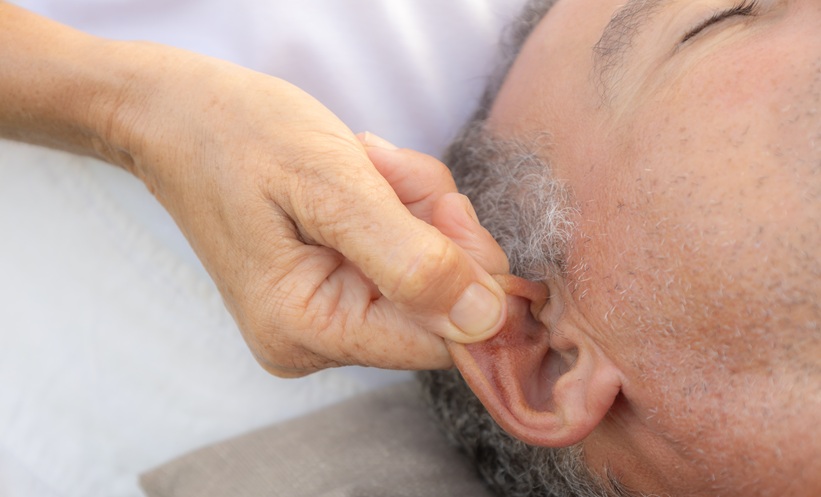
The single-centre trial was conducted in a dermatology outpatient department between October 2025 and May 2026. Participants were randomly assigned to active or sham acupressure, with 102 patients in each group. The active group applied a Vaccaria segetalis seed to the bilateral cavum conchae, an area innervated by the auricular branch of the vagus nerve. The sham group received seed placement on the auricular tubercle superior margin. Both groups continued standard first-line treatment and performed acupressure three times daily for 30 seconds over eight weeks, with additional pressing permitted during flare-ups.
At week eight, treatment success, defined as an Investigator Global Assessment score of zero or one, was achieved by 56.9% of the active group compared with 35.3% of the sham group (relative risk: 1.61; 95% confidence interval [CI]: 1.18–2.20; p=0.003). The number needed to treat was five.
Biomarker and Vascular Changes Observed
Serum levels of cathelicidin antimicrobial peptide (LL-37), calcitonin gene-related peptide (CGRP), tumour necrosis factor α (TNF-α), and interleukin 6 (IL-6) decreased more significantly with active acupressure than with sham treatment. These biomarkers were assessed at baseline and week eight.
Multispectral imaging at week four showed immediate vascular improvement in 59.3% of the active group, compared with 7.4% of the sham group (p<0.001). At week 20, the active group also maintained significantly lower Investigator Global Assessment and Clinical Erythema Assessment scores.
Safety and Further Evaluation
No serious adverse events were reported. The findings suggest that device-free auricular acupressure may provide additional benefit when used alongside standard rosacea treatment, while offering a potential option for on-demand symptom management.
However, the study was conducted at a single centre, and the findings should be interpreted within the context of its design and follow-up period. Although the biomarker changes support a possible neuroimmunomodulatory mechanism, they do not independently establish the pathway responsible for clinical improvement. Further studies are needed to assess reproducibility, longer-term outcomes, and the intervention’s role in routine rosacea management.
Reference
Xu B et al. Device-free auricular acupressure for rosacea: a randomized clinical trial. JAMA Dermatol. 2026;DOI:10.1001/jamadermatol.2026.3999.