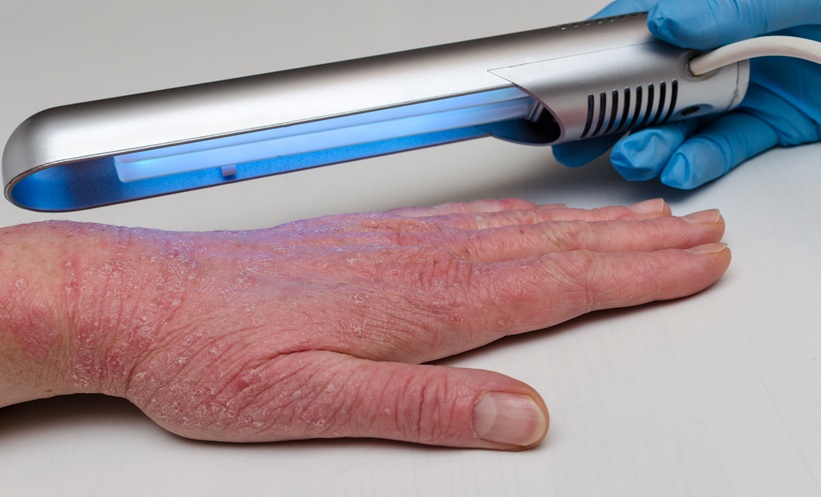
PSORIASIS was associated with a broad range of long-term comorbidities across multiple organ systems, including liver disease, substance misuse and respiratory disease, according to a UK longitudinal cohort study.
The study compared 320,220 individuals with psoriasis with 1,706,424 matched individuals using UK primary and secondary care data. Researchers evaluated associations between psoriasis and 225 groups of conditions to examine the breadth of comorbidity recorded around diagnosis and during subsequent follow-up.
Which Comorbidities Are Linked to Psoriasis?
The study used a phenome-wide longitudinal approach to investigate associations between psoriasis and groups of conditions classified according to the International Classification of Diseases, Clinical Modification, 10th edition.
Cohorts were matched by age, sex and general practice. Researchers assessed outcomes during the first year following psoriasis diagnosis and during the subsequent period, using Cox regression models adjusted for alcohol, smoking, body mass index and measures of social deprivation.
Across the 225 disease blocks assessed, psoriasis was associated with numerous outcomes spanning different organ systems. The findings provide evidence that the comorbidity burden associated with psoriasis extends beyond dermatological disease.
Which Long-Term Conditions Showed the Strongest Associations?
Several non-dermatological conditions demonstrated particularly strong long-term associations with psoriasis. Liver disease was associated with psoriasis (hazard ratio [HR]: 1.47; 99% confidence interval [CI]: 1.42–1.51; risk difference [RD]: 1.16).
Substance misuse, including alcohol and tobacco misuse, was also associated with psoriasis (HR: 1.26; 99% CI: 1.25–1.28; RD: 3.27).
Other respiratory diseases, principally affecting the interstitium, showed a further association (HR: 1.33; 99% CI: 1.27–1.40; RD: 0.31).
The breadth of associations across organ systems suggests that comorbidity in psoriasis may extend beyond conditions already recognised in routine clinical assessment.
What Could the Findings Mean for Psoriasis Care?
International guidelines already recommend screening people with psoriasis for a range of associated conditions. The study adds evidence on the wider spectrum of comorbidity recorded among individuals with psoriasis and identifies associations that may warrant further investigation.
The researchers noted that the findings could generate hypotheses about previously underappreciated associations between psoriasis and other health conditions.
The observational findings demonstrate associations rather than causation. Further research will be needed to investigate the mechanisms underlying these relationships and determine whether the newly identified associations have implications for clinical screening or management.
Reference
Leonard G et al. Phenome-wide longitudinal association study of hospital-recorded comorbidity in psoriasis. Br J Dermatol. 2026;DOI:10.1093/bjd/ljag450.